
Every spring, Twin Cities homeowners discover the same problem: water in the basement after snowmelt or a heavy rain. The instinct is to look inward, to wonder whether the sump pump failed or whether interior waterproofing is needed. But the answer is often sitting right outside, in the slope of the ground around your foundation.
Corrective grading is one of the simplest, most cost-effective things you can do to protect a foundation. Before investing in interior drainage systems, it is worth understanding what grading does and why it is almost always the right starting point.
What Grading Actually Does
Grading refers to the angle and shape of the soil around the perimeter of your home. When the ground slopes toward your foundation, water from rain and snowmelt flows toward the structure. It collects against the walls, saturates the soil, and eventually finds its way through cracks, mortar joints, and window well frames.
When the ground slopes away from your foundation, that same water moves in the other direction. It drains toward the yard, into swales, and away from the structure before it has a chance to cause damage.
That distinction, water moving toward the house versus away from it, is the entire game.
The 6-Inch Rule
The standard most builders and waterproofing professionals reference is simple: the ground should drop at least 6 inches within the first 10 feet away from your foundation walls. That slope does not need to be dramatic. It just needs to be consistent and in the right direction.
Over time, soil settles. Mulch compresses. Flower bed edging holds water in place. Sod that was graded correctly when a home was built can shift over 10 or 15 years until the slope is flat or even inverted. In the East Metro and St. Croix Valley, freeze-thaw cycles accelerate this process every winter. If your home is more than a decade old and the grade has never been evaluated, there is a reasonable chance it has shifted enough to become a problem.
Gutters and Downspouts Are Part of the System
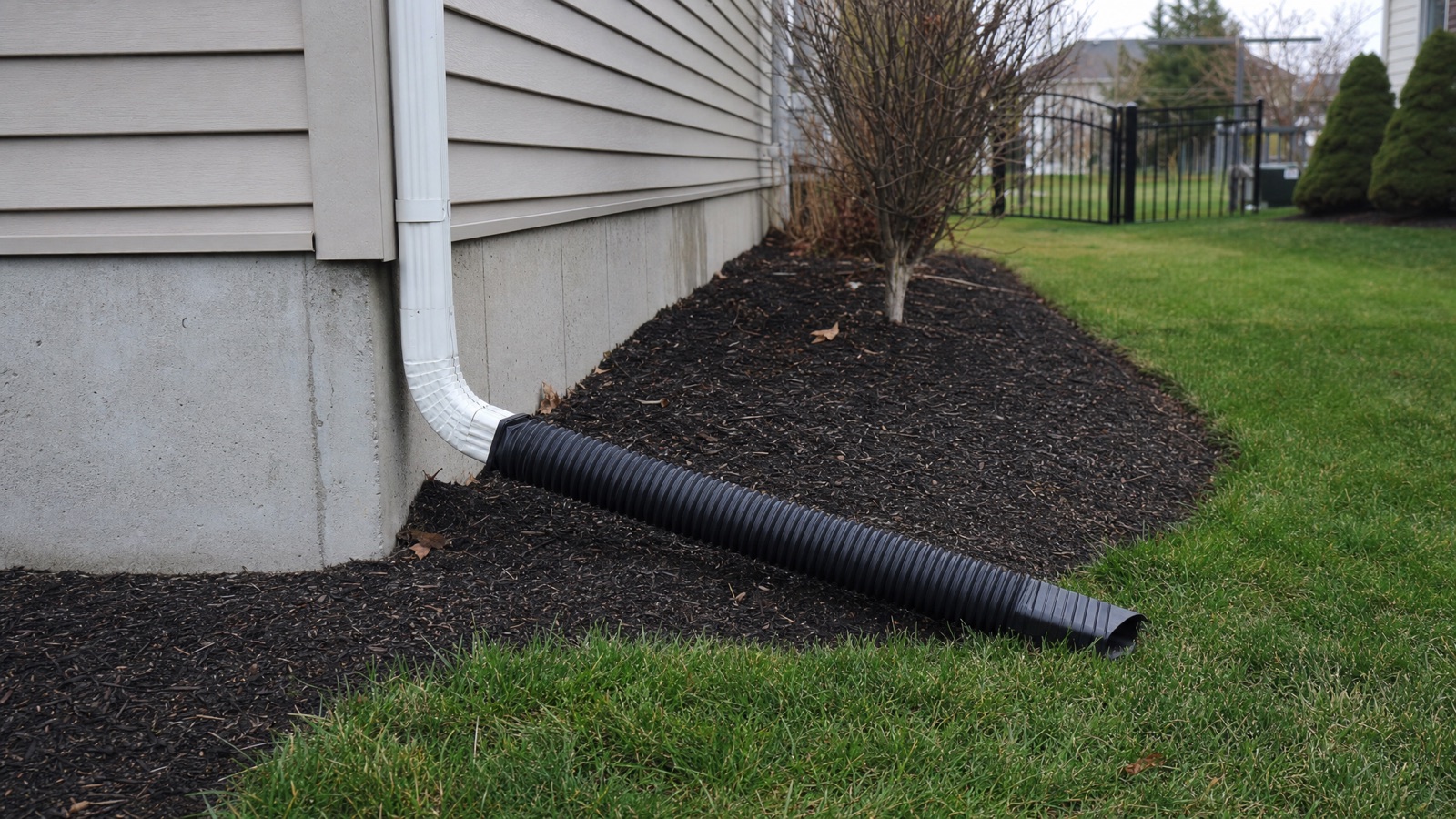
Grading does not work in isolation. Even a well-sloped yard can be overwhelmed by a downspout that terminates right at the foundation wall. A single downspout during a heavy rain can discharge a large volume of water in a short period. If that water is dropping directly next to the structure, no amount of slope in the surrounding soil will fully compensate.
Downspout extensions should carry water at least 4 to 6 feet away from the foundation before releasing it. Splash blocks help, but they are not a substitute for proper extension length. Gutters themselves need to be clean and functional so that water is actually making it into the downspouts rather than spilling over the sides and soaking the soil right next to the house.
Addressing gutters and downspouts at the same time as grading gives you a complete exterior drainage system rather than a partial fix.
Window Wells and Problem Zones
Basement window wells are a common weak point. When grading fails around a window well, water pools inside the well casing. From there, it has direct access to the window frame, the glass seal, and any gaps around the frame opening.
Window well drains help, but they require maintenance and can clog with debris. The more reliable long-term approach is ensuring the grade around the well directs water away from that zone in the first place, and that the well cover is intact and properly seated.
If you are seeing water specifically around basement windows after rain or snowmelt, the grade and the window well condition are the first things worth examining before pursuing interior solutions.
How Clay Soil Factors In
Minnesota soils, especially in developed suburban areas like Woodbury and the East Metro, tend to be clay-heavy. Clay is actually useful in grading work because it is dense and relatively impermeable. A properly packed clay-heavy slope sheds water at the surface rather than absorbing it, which means less infiltration reaching the foundation wall.
When grading is corrected or restored, the choice of fill material matters. Using clay-based soil for the upper layer of a graded slope creates a more effective barrier than using sandy or loamy fill that allows water to percolate quickly downward toward the footing.
This is one reason grading work done correctly with the right materials tends to hold up better over time than grading done simply by adding topsoil or mulch.
Grading Before Interior Systems
If you are dealing with recurring basement water, the sequence matters. Starting with interior waterproofing before exterior grading is addressed means you may be managing a symptom rather than a cause. Interior drainage systems, including drain tile and sump systems, are legitimate tools when they are needed. But they are a secondary line of defense, not a first one.
The most cost-effective approach for most homeowners is to:
- Have the exterior grade evaluated by a professional
- Address gutters and downspouts at the same time
- Make grading corrections first
- Reassess whether interior systems are still needed after one or two wet seasons
In many cases, corrective grading alone resolves the water intrusion entirely. When it does not, the interior work that follows is often simpler and less expensive because the volume of water reaching the foundation has been significantly reduced.
If you are dealing with visible cracks in foundation walls, bowing walls, or structural movement, foundation repair is a separate conversation from grading. But even in those cases, correcting the exterior drainage is part of any lasting repair.
What to Do Next
If you are not sure whether grading is contributing to your water problems, a professional inspection is the logical starting point. We offer free inspections for homeowners across the East Metro and St. Croix Valley. You can contact us directly or call 651-364-4400 to schedule.
Do not wait until water is already coming in. The window between late winter and early spring, before the ground saturates and snowmelt peaks, is the best time to assess and correct grading issues.
A proper slope around your foundation is one of the least expensive investments you can make in the long-term health of your home. Get the grade right first, and you may find that most of the expensive solutions you were considering are no longer necessary.
Related Services
Have a Foundation Concern?
Get a free, honest inspection from a local team with 20+ years of Twin Cities experience.
Call 651-364-4400