
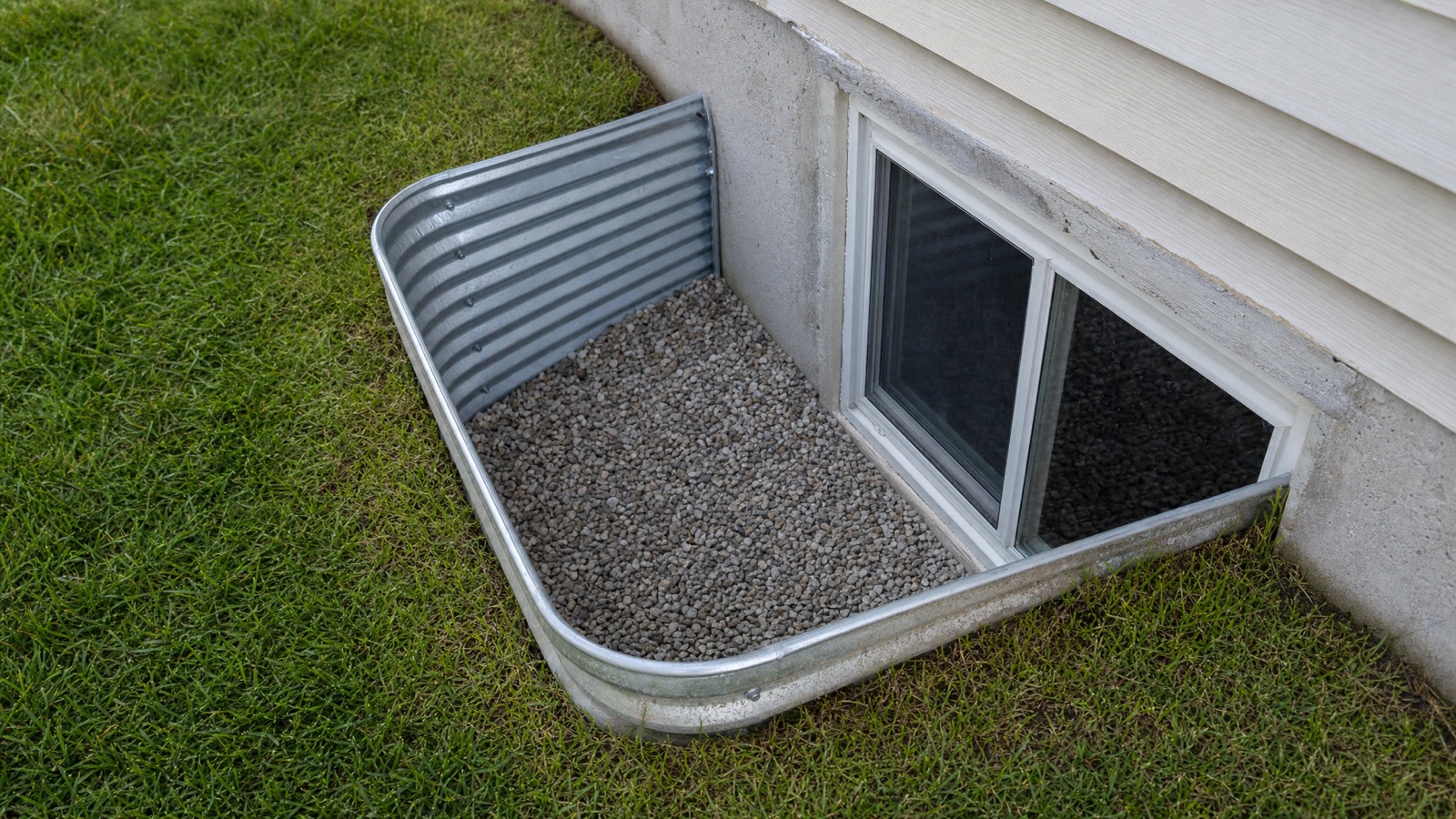
A window well is a small thing with a big job. It holds back the surrounding soil so a below-grade window can admit light and air. When window wells are built right and drained properly, they work invisibly for decades. When they are not, they become the most reliable water entry point in your basement.
This is especially true in the Twin Cities East Metro, where spring snowmelt combines with clay-heavy soils that hold water rather than drain it. If you have a finished basement, a bedroom in the lower level, or plans to add one, understanding how window wells and egress windows work together is worth your time.
Why Window Wells Flood
Water finds window wells for a few reasons, and they often stack on top of each other.
The most common problem is a missing or failed drain. A window well is essentially a bucket dug into the ground next to your foundation. Without a drain at the bottom, any water that enters has nowhere to go except up, and eventually through your window or wall.
A second problem is gravel that has silted over. Proper window wells are backfilled with clean, coarse gravel that lets water move freely down to the drain. Over time, fines from the surrounding soil migrate into that gravel and pack the voids. Drainage slows, then stops.
The third problem is grade. If the ground around your home slopes toward the foundation rather than away from it, rain and snowmelt run directly into the well before the drain can keep up. This is often what pushes a marginal window well over the edge during heavy rain. Corrective grading around the well is sometimes all that is needed to reduce the load on the drainage system.
How a Properly Built Window Well Should Work
A well-designed window well has several components working together.
Size and depth. The well needs to extend below the window sill by a meaningful margin so there is room for gravel and drainage before water reaches the window opening. It also needs to be wide enough that you can clear snow and debris and, if required for egress, wide enough to climb out of. Your local building department can tell you what your specific code requires.
Free-draining gravel. The bottom of the well should be backfilled with clean washed stone, not pea gravel that compacts, and not native soil. This gravel bed is what moves water down to the drain rather than letting it pool at window level.
A working drain tied to the perimeter system. The drain at the bottom of the well should connect to your perimeter drain tile system or daylight to a point lower than the well. A drain that terminates in a sealed hole accomplishes nothing. When drain tile is absent or compromised, fixing the window well drain is only part of the solution.
A cover. A fitted polycarbonate or metal cover keeps rain and debris out of the well while still allowing light through. This is one of the simplest preventive measures and one of the most commonly skipped.
The Egress Window Connection
If you are finishing your basement or converting a lower-level room into a bedroom, most municipalities require an egress window in that room. The intent is straightforward: occupants need a way out and emergency responders need a way in if the interior exit is blocked.
Egress requirements typically address minimum opening width, height, and net clear area, plus maximum sill height from the finished floor. When a window well is required to meet these dimensions, there are additional size and depth requirements for the well itself.
We are not going to cite specific numbers here because they vary by jurisdiction and code cycle, and you should verify what applies to your project with your local building department before you start. What we will say is that egress windows require larger wells than standard basement windows, and larger wells collect more water if they are not drained properly. Getting the window right without getting the drainage right is an incomplete job.
Fixing a Flooding Window Well
If your window well is already causing problems, here is what a proper repair looks like.
First, the existing gravel is excavated. If there is no drain, one is installed at the base of the well and connected to the perimeter drain tile system. If drain tile is absent, that conversation needs to happen before the window well repair proceeds. Adding a window well drain to a foundation with no perimeter drainage is like adding a spigot to a full bucket.
Once the drain is in place, clean washed gravel is backfilled around and above it. The well liner is inspected and replaced if it has collapsed or shifted. A cover is fitted to the opening. If grading around the well is directing water toward the foundation, that is corrected as part of the same project. See our page on corrective grading for more on what that involves.
In some cases, the window itself has allowed water into the wall cavity or the framing around it. If there is any sign of that, the wall should be inspected before the repair is closed up. Our team can assess whether foundation repair or structural work is needed alongside the drainage fix.
What to Do Next
If your window well leaks, fills during rain, or you are planning a basement finish that requires egress, we can help you get it right. Concrete & Foundation Solutions has been working in the Twin Cities East Metro and St. Croix Valley for over 20 years. We offer free inspections and will give you a straightforward assessment of what the well needs and what it will cost.
Call us at 651-364-4400 or contact us to schedule your free inspection. We will look at the well, the drain, the grading, and the surrounding foundation and tell you exactly what we find.
Related Services
Have a Foundation Concern?
Get a free, honest inspection from a local team with 20+ years of Twin Cities experience.
Call 651-364-4400