
Minnesota basements take on a lot of water over the course of a year. Spring snowmelt, heavy summer rain, and the freeze-thaw cycles that define the Twin Cities all push moisture into the soil around your foundation. When that pressure builds with nowhere to go, it finds the path of least resistance: your basement.
Interior drain tile is one of the most reliable and widely used solutions for wet basements in the East Metro and beyond. If you are dealing with water intrusion and wondering what your options are, this is a good place to start.
What Interior Drain Tile Actually Does
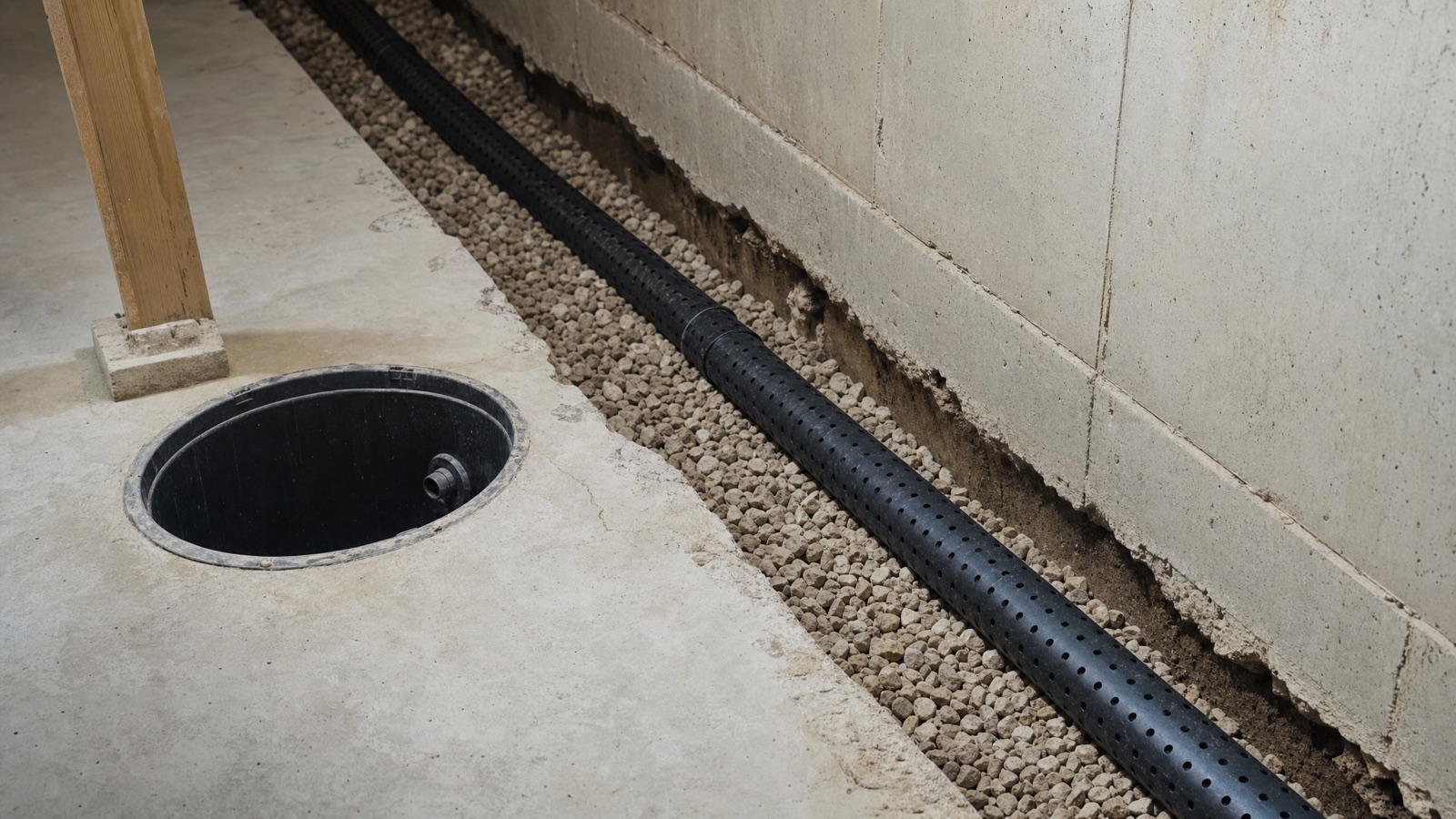
The term “drain tile” comes from older clay pipe systems, but modern installations use perforated PVC or corrugated plastic pipe. The system is installed at the base of your basement walls, just inside the footing, beneath the concrete floor.
Here is how it works:
- A narrow trench is cut along the interior perimeter of the basement floor
- Perforated pipe is laid at or near the footing level, usually in a bed of clean gravel
- The pipe is pitched to route water toward a sump pit
- A sump pump removes the collected water and discharges it away from the foundation
The key is where the pipe sits. Water that seeps through your block or poured concrete walls, or that wicks up through the floor at the wall-floor joint, enters the drainage channel before it reaches your living space. The system does not stop water from entering the foundation, but it intercepts it and removes it before it causes damage.
Why It Targets Hydrostatic Pressure
Hydrostatic pressure is the force that saturated soil exerts against your foundation walls. In the Twin Cities, this pressure spikes during spring snowmelt and after heavy rainfall, when the water table rises and the ground cannot absorb moisture fast enough.
That pressure does not care about waterproofing paint or wall panels. It will push water through the smallest crack, through porous block, or straight up through the floor slab. Interior drain tile addresses the problem at the source by giving that water a controlled outlet. Once the water enters the drainage system and gets pumped out, the pressure against your walls drops.
For Minnesota homes, this matters year-round. Even in winter, frost and thaw cycles can introduce moisture, and a properly installed system handles that load without interruption.
Interior vs. Exterior: Understanding the Tradeoff
Exterior waterproofing involves excavating around the outside of your foundation, applying a waterproof membrane to the exterior wall face, and installing drainage at the footing from the outside. It can be highly effective, but it comes with significant cost and disruption. Landscaping, decks, driveways, and utilities near the foundation all complicate exterior work.
Interior drain tile avoids all of that. The tradeoffs worth knowing:
What interior drain tile does well:
- Manages active water intrusion and hydrostatic pressure effectively
- Can be installed in any season, including winter
- Works in finished and unfinished basements
- Causes far less disruption than exterior excavation
- Lower overall cost in most situations
What exterior work does better:
- Addresses wall cracks from the outside, preventing water from entering the wall at all
- May be preferable when the wall itself is deteriorating or heavily damaged
For most homeowners dealing with a wet basement in the East Metro, interior drain tile is the practical, cost-effective answer. If your foundation has structural concerns alongside water issues, foundation repair may need to be part of the plan as well.
Year-Round Installation, Including Finished Spaces
One of the most practical advantages of interior drain tile is the installation window. Because the work happens inside, weather does not stop the job. February installation is just as viable as August, which matters in Minnesota where you often discover a wet basement problem in the middle of winter.
The installation process in a finished basement looks like this:
- Remove a narrow section of flooring along the perimeter (carpet or tile is cut back, not necessarily removed entirely)
- Saw-cut and remove a strip of concrete, typically 12 to 18 inches wide
- Dig the trench, install gravel and pipe, and route to the sump pit location
- Pour new concrete to restore the floor
- Replace flooring to match
The result is a functional drainage system with minimal visible evidence of the work. Many homeowners choose to have this done while the basement is still unfinished, then finish the space knowing the water problem is handled.
If your yard’s slope is directing water toward the house rather than away from it, corrective grading can reduce the volume of water reaching your foundation in the first place, working alongside the drain tile system rather than against it.
The Sump Pump Connection
Interior drain tile only works if the sump pump works. The two components are a system, not independent solutions. A high-quality sump pump with a battery backup is the right pairing for most Twin Cities homes.
Battery backup matters here. The storms that produce the most water around your foundation are also the storms most likely to knock out power. A backup system keeps the pump running when you need it most.
Primary pumps should be inspected annually and replaced proactively around the 7 to 10 year mark. Waiting for failure is not a strategy you want when 2 inches of rain is in the forecast.
Materials and Lifespan
Modern drain tile systems installed with rigid PVC pipe, proper gravel bedding, and sealed connections can last 20 years or more. The pipe itself does not wear out under normal conditions. What can degrade over time is the sump pump and, in older systems, the pipe if roots infiltrate or sediment accumulates.
If you have an older system that is failing or a home where drain tile was installed decades ago using clay or thin corrugated pipe, drain tile repair and replacement can restore performance without a full reinstall in many cases.
Is Interior Drain Tile Right for Your Basement?
If you are seeing water along the base of your foundation walls, at the wall-floor joint, or seeping up through the floor slab, interior drain tile is worth a serious look. It is one of the most proven, durable, and practical solutions available for Minnesota basements.
Concrete and Foundation Solutions serves Woodbury and the East Metro with 20 years of experience in basement waterproofing. We offer free inspections so you can get an honest assessment of what is actually happening before committing to any work. Call us at 651-364-4400 or contact us online to schedule yours.
Related Services
Have a Foundation Concern?
Get a free, honest inspection from a local team with 20+ years of Twin Cities experience.
Call 651-364-4400