
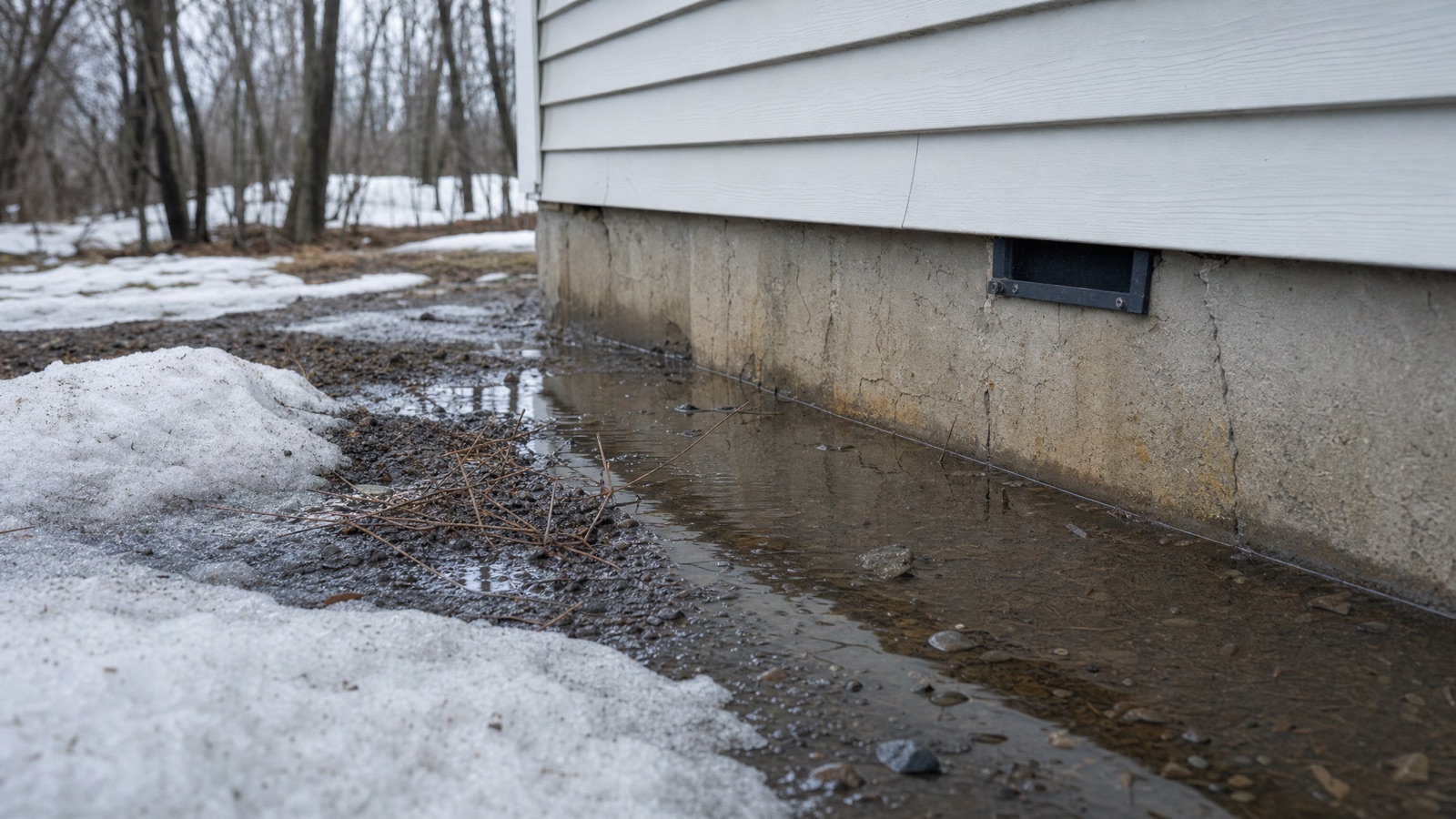
Late February and early March are the most stressful weeks of the year for Minnesota basements. Snow that accumulated over months begins to melt, but the ground beneath it is still frozen. Water has nowhere to go but sideways, and it finds the path of least resistance directly toward your foundation. This guide walks through the practical steps East Metro homeowners can take right now, before the first serious thaw, to reduce that risk.
Why Late Winter Is the Danger Window
Most people think of summer thunderstorms as the biggest waterproofing threat. Those storms do cause problems, but soil that has warmed and dried through spring absorbs rain reasonably well. Late-winter snowmelt is different. Frozen ground acts like pavement: it sheds water instead of absorbing it. When a foot or more of compacted snow melts over a few warm days, all of that water runs across the surface toward whatever low point it can find. For a lot of Twin Cities homes, that low point is the foundation wall.
Frost depth in the East Metro regularly reaches 40 to 60 inches. Even as surface temperatures climb above freezing, the ground at depth stays frozen well into spring. That means the window when surface water has nowhere to drain can last several weeks. Getting your home ready before that window opens makes a significant difference.
Steps to Take Before the Thaw
Test Your Sump Pump Now
Your sump pump does the most critical work during the shortest window. A pump that fails on a warm March night can mean several inches of water in the basement before morning. Pour a bucket of water into the pit to confirm the float triggers the pump and that it clears the pit completely. Check that the discharge line exits the home and terminates several feet from the foundation, and verify there are no ice blockages in the line.
If your pump is more than seven or eight years old, consider replacing it proactively rather than hoping it holds through another season. A battery backup unit is worth adding if you do not already have one. Power outages during spring storms are common, and that is exactly when the pump needs to be running.
Clear Gutters and Extend Downspouts
Clogged gutters overflow during snowmelt and dump water directly against the foundation. Clean them out before temperatures drop again so ice does not refreeze inside. Downspout extensions should carry water at least four to six feet from the house. Splash blocks help but are not enough on their own when volume is high.
Check Your Grading
The soil around your foundation should slope away from the house, not toward it. Settle or erosion over time can reverse that slope, and winter frost heave can shift grades that were previously correct. Walk the perimeter of your home and note any areas where water would pool against the foundation. Low spots, sunken garden beds, or soil that has pulled away from the wall are all concerns. Corrective grading is one of the most cost-effective improvements a homeowner can make before spring arrives.
Inspect Window Wells
Window wells collect debris and can fill with standing water if the drain at the bottom is blocked. Clear out any leaves, dirt, or ice. If your window wells do not have covers, consider adding them before snowmelt begins. A flooded window well puts direct pressure on basement windows and the surrounding wall.
Manage Snow Piles Away from the Foundation
When you shovel or snowblow, resist the convenience of piling snow against the house. Those piles melt last and release water slowly right at the foundation wall. Move them at least six feet out from the perimeter. This one habit change makes a noticeable difference when thaw arrives.
Look for Cracks That Widened Over Winter
Freeze-thaw cycles put stress on foundation walls. Walk your basement now and compare what you see to what you remember from last fall. Horizontal cracks in block walls, stair-step cracks along mortar joints, and vertical cracks that have grown wider all deserve attention. A crack that was stable last year may have shifted as frost pushed against the wall this winter. Catching changes early keeps repair options simpler and less costly. Learn more about what different crack types mean on our foundation repair page.
Know the Warning Signs of Seepage
Even with preparation, some homes will see moisture intrusion during a heavy thaw. Watch for:
- Water staining on the lower portion of walls, especially in corners
- Efflorescence, the white chalky mineral deposits that appear where water has passed through concrete
- Musty odor that increases after warm spells
- Wet spots or puddles on the floor near walls or floor joints
- Bowing or cracking walls that have changed since last inspection
Any of these signs warrants a professional evaluation. If your existing drain tile system is aging or undersized, spring is a good time to address it before the full load of snowmelt tests it.
Get a Professional Set of Eyes Before Spring
The steps above are things every homeowner can and should do. But some problems are not visible without knowing where to look. Concrete and Foundation Solutions has served the Twin Cities East Metro and St. Croix Valley for more than 20 years, and spring inspections are something our team does every year with local homeowners.
If you want a professional walkthrough before the thaw season hits, contact us or call 651-364-4400 to schedule a free inspection. Catching a drainage problem in February costs far less than addressing water damage in April.
Related Services
Have a Foundation Concern?
Get a free, honest inspection from a local team with 20+ years of Twin Cities experience.
Call 651-364-4400