
Minnesota winters are hard on houses, and few parts of a house take more abuse than the foundation. Clay soils, aggressive freeze-thaw cycles, and snowmelt-driven water pressure work on your foundation year after year. The good news is that most foundation problems start small and show clear warning signs before they become structural emergencies. Knowing what to look for gives you time to act.
Cracks: What the Pattern Tells You
Not all cracks are equal. The location, direction, and width of a crack tell you a great deal about what is happening underneath.
Horizontal Cracks
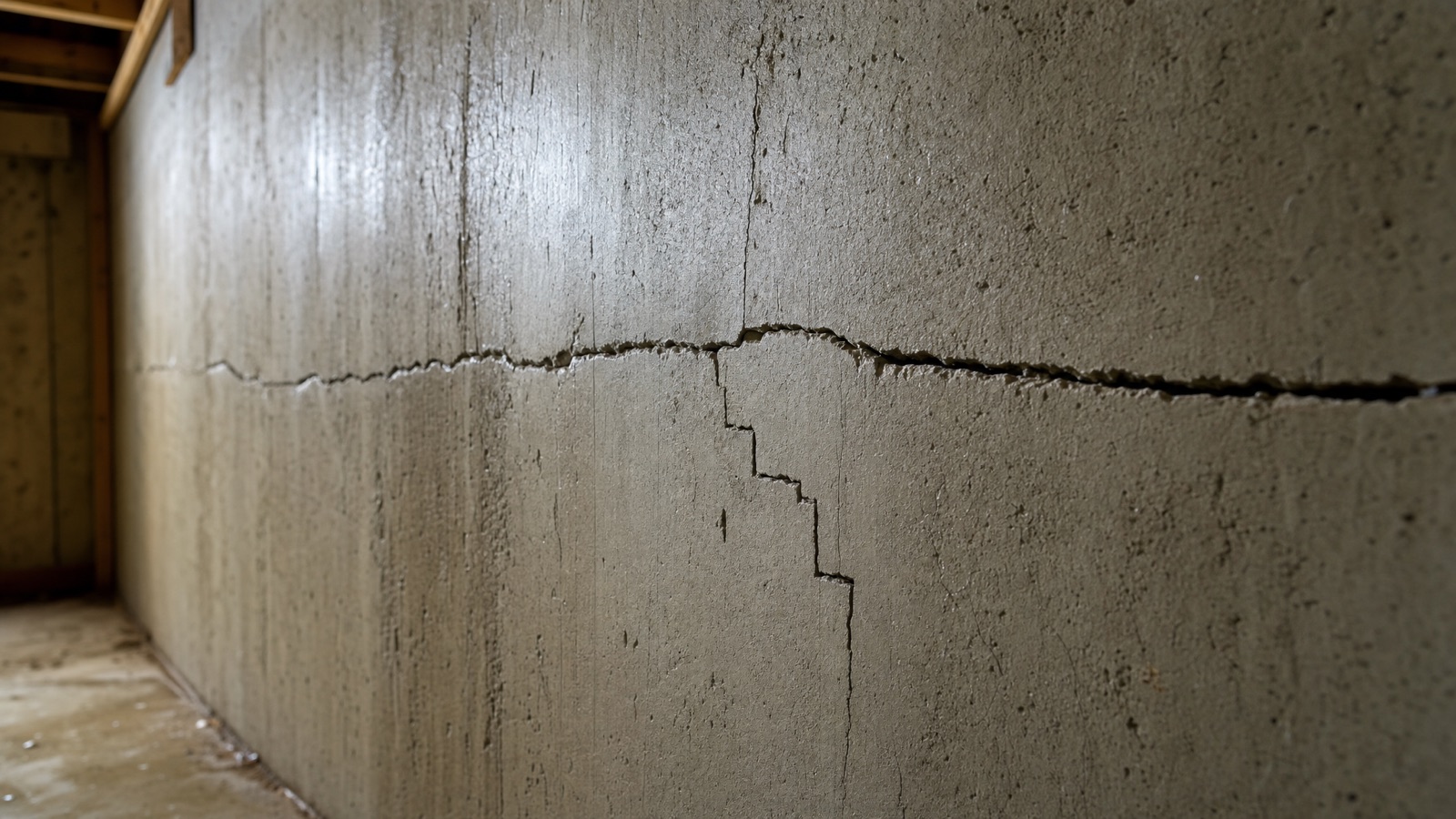
Horizontal cracks are the most serious type you can find in a basement wall. They typically run across a block or poured concrete wall and indicate that lateral soil pressure is pushing in from outside. In Minnesota, this pressure often builds after heavy spring snowmelt or prolonged wet periods when clay soils absorb water and expand. A horizontal crack that is widening or accompanied by inward bowing demands prompt attention. This is not a cosmetic issue. Learn more about foundation repair options if you are seeing this pattern.
Stair-Step Cracks
Stair-step cracks follow the mortar joints in block or brick foundations, moving diagonally in a staircase pattern. These usually indicate differential settling, where one section of the foundation is moving more than another. They can develop slowly over many years. A single small stair-step crack may be stable, but multiple cracks, any crack wider than roughly 1/4 inch, or cracks that are growing are worth having evaluated.
Vertical and Diagonal Cracks in Poured Concrete
Thin vertical cracks in poured concrete walls are common and often cosmetic, especially in older homes. They typically result from concrete shrinkage as it cured decades ago. The concern rises when a vertical crack is wide enough to pass light through it, is actively letting in water, or appears alongside other symptoms. Diagonal cracks at corners often point to settling at one end of the foundation.
Bowing or Leaning Walls
A basement wall that appears to lean inward or curves visibly along its face has experienced enough lateral pressure to deform. This is more common in block foundations than poured concrete. If you hold a long straightedge against the wall and see a gap in the middle, the wall has bowed. Even a small amount of bow combined with horizontal cracking is a serious warning sign. Block repair methods vary depending on how far the wall has moved and whether the movement is active or historical.
Sticking Doors and Windows
Doors and windows that suddenly stick or jam are easy to dismiss as a humidity problem. In Minnesota, humidity changes do cause wood to swell in summer and shrink in winter, so occasional sticking is normal. However, sticking that is concentrated in one area of the house, worsens over time, or is accompanied by visible gaps at the top or sides of the frame often reflects foundation movement rather than seasonal wood expansion. Pay attention to whether the problem changes with the seasons or only gets worse.
Sloping or Bouncy Floors
Sloping floors above a crawl space or basement can develop from several causes, including deteriorating support posts, rotting sill plates, or foundation wall movement. A slope that is gradual and has been unchanged for years is often just old settling. A slope that appears to be progressing, or that you notice for the first time in a home you have lived in for years, warrants a closer look.
Springy or bouncy floors in the middle of a span are more often a framing issue than a foundation issue, but the two can be connected if the foundation walls providing support have shifted.
Water Intrusion
Water in a basement is not always a foundation structural problem, but it is always a problem that affects the foundation over time. Chronic moisture accelerates deterioration of mortar joints, causes efflorescence (the white mineral deposits you often see on block walls), and can erode the soil that supports a footing.
Common water entry points include:
- Cracks in the wall (both horizontal and vertical)
- The joint where the wall meets the floor slab
- Through the block itself when the exterior waterproofing has failed
Addressing the source of water before it causes structural damage is far cheaper than repairing the damage afterward. Corrective grading is often part of the solution when water is pooling against the foundation due to improper slope.
Gaps Around Windows, Trim, and Exterior Doors
Gaps that open between a door frame and the surrounding wall, or between window trim and the adjacent siding, can indicate that the structure is shifting. In a home with a stable foundation, these gaps typically remain consistent from year to year. A gap that is widening, or a new gap that appeared over a single winter, is worth tracking and potentially having inspected.
What Is Cosmetic vs. What Is Serious
Most homeowners will encounter minor foundation cracks at some point. A short, hairline crack in a poured wall that has not changed in years is usually cosmetic. The indicators that push something from cosmetic to structural concern include:
- Active movement (the crack, bow, or gap is growing)
- Multiple symptoms appearing together (cracks plus bowing plus water)
- Horizontal orientation in a basement wall
- Width greater than 1/4 inch in any crack
- Water intrusion through the crack or wall
What to Do Next
If you are seeing one or more of these signs in your East Metro or St. Croix Valley home, the right first step is a professional inspection rather than a DIY repair. Patching a crack from the inside does not address the cause, and in some cases it can mask a problem that worsens underneath. Depending on what is found, solutions may range from improved drainage with drain tile to wall anchoring to corrective grading outside the home.
Concrete & Foundation Solutions has been evaluating and repairing foundations in the Twin Cities East Metro for over 20 years. We offer free inspections so you can get an honest assessment before committing to any repair. Call 651-364-4400 or contact us to schedule a time that works for you. The earlier a foundation problem is caught, the more options you have.
Related Services
Have a Foundation Concern?
Get a free, honest inspection from a local team with 20+ years of Twin Cities experience.
Call 651-364-4400