
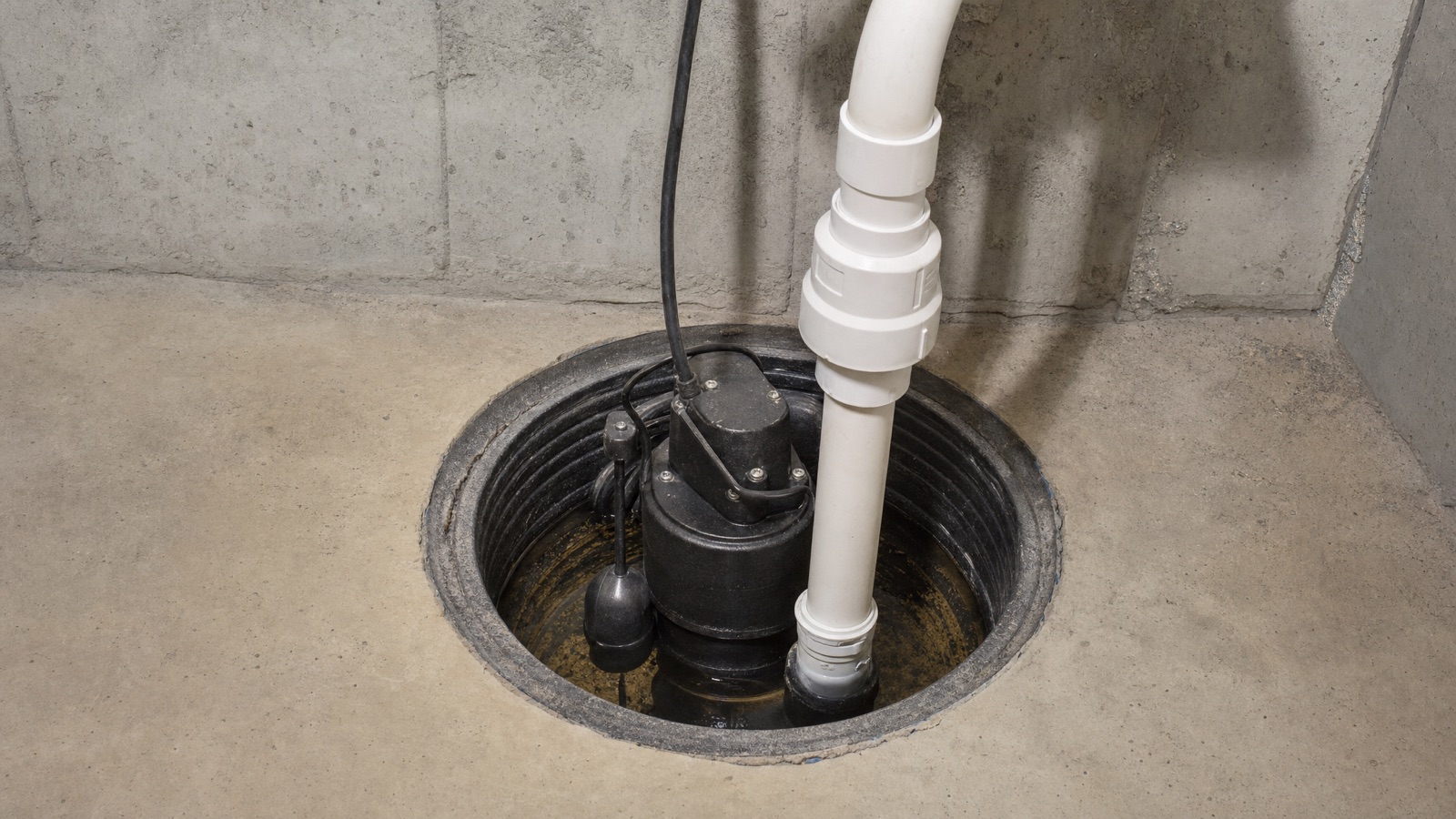
Minnesota basements get hit from two directions: spring snowmelt pushing groundwater up through the soil, and summer storms delivering inches of rain in hours. A sump pump is often the last line of defense between a dry basement and a flooded one. Understanding how it works and what it needs to keep working will save you a lot of grief.
How a Sump Pump Works with Drain Tile
A sump pump does not work alone. It works as the outlet for a drain tile system that collects water moving through or under your foundation. Perforated pipe runs along the interior or exterior perimeter of your footing, capturing groundwater before it enters the living space. That water flows by gravity into a sump pit, a basin typically 18 to 24 inches in diameter dug into the basement floor at the lowest point. When water in the pit rises to a set level, the pump activates, pulls the water out, and discharges it away from the foundation through a pipe routed to daylight or a storm drain.
Without the drain tile collecting and directing the water, a sump pump would have to wait for water to find its own way to the pit, which is slower and less reliable. The two systems work together. If your drain tile is clogged or broken, even a working pump cannot keep up during heavy events.
Submersible vs. Pedestal Pumps
Submersible pumps sit inside the pit, submerged in water when active. They are quieter, typically more powerful, and better sealed. Most homeowners with a standard pit and a finished or used basement prefer submersible units.
Pedestal pumps mount above the pit on a shaft, with only the intake in the water. They are easier to access for service and tend to cost less upfront, but they are louder and the motor is exposed. They make more sense in very narrow pits or where budget is a primary concern.
For most Minnesota homes, a quality submersible pump in the 1/2 to 3/4 horsepower range handles typical water volumes. If your pit fills quickly during heavy rain or snowmelt, or if you have a large home on a high water table lot, size up.
Why Battery Backup Matters in Minnesota
Power outages and heavy rain arrive together in Minnesota. A strong spring storm, the kind that dumps two to three inches overnight, is exactly the scenario that overwhelms a sump pump, and it is also when the power is most likely to go out.
A battery backup pump sits in the same pit as your primary pump. It runs on a deep cycle battery and activates automatically when the primary pump fails or when the water level rises faster than the primary can handle. A fully charged battery backup can cycle thousands of gallons before it depletes, enough to get through most outages.
Water-powered backup pumps are an alternative that uses municipal water pressure rather than a battery. They require no charging and have no battery to replace, but they do consume city water while running, which can get expensive during a long event. They are also only an option if your home has adequate water pressure and you are connected to city water, not a private well.
Either backup option is far less expensive than cleaning up a flooded basement.
Testing Your Sump Pump
Testing takes about five minutes. Pour water into the pit slowly until the float rises and the pump activates. Watch the discharge line to confirm water is actually moving out. The pump should shut off within a few minutes after the pit empties.
Test the battery backup separately by unplugging the primary pump, then pouring water until the backup activates. Recharge or replace the battery if it does not hold a charge.
Do this before spring melt every year and again before the summer storm season. If the pump hesitates, runs continuously, or makes grinding or rattling noises, it needs attention before you need it.
Maintenance and Lifespan
Most sump pumps last 7 to 10 years with routine maintenance. What that maintenance looks like:
- Clean the pit annually. Remove debris, gravel, and silt that accumulate in the basin and can clog the intake screen.
- Check the float. The float switch triggers the pump. Make sure it moves freely and is not tangled or stuck against the pit wall.
- Inspect the discharge line. Look for damage, disconnected sections, or anything blocking the outlet. Clear ice or snow from the exit point in late winter.
- Test the check valve. The check valve prevents discharged water from flowing back into the pit. If it is failing, you will hear the pump cycle on and off rapidly.
A pump approaching or past 10 years is worth replacing proactively, even if it appears to be working. The cost of a pump is a fraction of the cost of water damage from a failed one.
Discharge Line Freeze Prevention
This is a Minnesota-specific problem that causes real damage. When a discharge line freezes, the pump has nowhere to send water and can burn out, or the pit overflows into the basement.
Keep these principles in mind:
- Slope the discharge line continuously downward from the pump to the outlet so water drains completely after each cycle. Standing water in the line freezes.
- Keep the outlet end clear and extend it at least six feet from the foundation, ideally further.
- Avoid running the line along the exterior of the home where cold air exposure is maximized. Bury the exterior portion below frost depth where the run is long enough to justify it.
- In older installations where the line runs through a rim joist or through the foundation at grade, adding insulation around that section reduces freeze risk.
If your current discharge setup exits near grade level or runs horizontally for any significant distance, it is worth reviewing before next winter.
Signs Your Sump Pump Is Failing
- Runs continuously or cycles on and off without the pit filling
- Makes grinding, rattling, or high-pitched noises during operation
- Visible rust or corrosion on the pump body
- Does not activate when water rises, or activates late
- Pit fills faster than usual during a storm that previously caused no problems
- Older than 10 years and never serviced
Any of these warrant a closer look. Some issues, like a stuck float, are simple fixes. Others, like a burned-out motor, mean replacement.
When to Call a Professional
If you are unsure whether your drain tile and sump system are working together properly, or if you have had water intrusion that your pump did not prevent, the problem may go beyond the pump itself. A failed or clogged drain tile system will overwhelm any pump. Corrective grading around the foundation can also affect how much water reaches the pit in the first place. And if you are seeing wall cracks, bowing, or settling, those are separate issues that require a look at the structure itself. Foundation repair should not wait while water problems are worked out.
Concrete & Foundation Solutions serves the East Metro and St. Croix Valley with free inspections. If you have questions about your sump system or want a set of experienced eyes on your basement, call us at 651-364-4400 or contact us to schedule.
Related Services
Have a Foundation Concern?
Get a free, honest inspection from a local team with 20+ years of Twin Cities experience.
Call 651-364-4400