
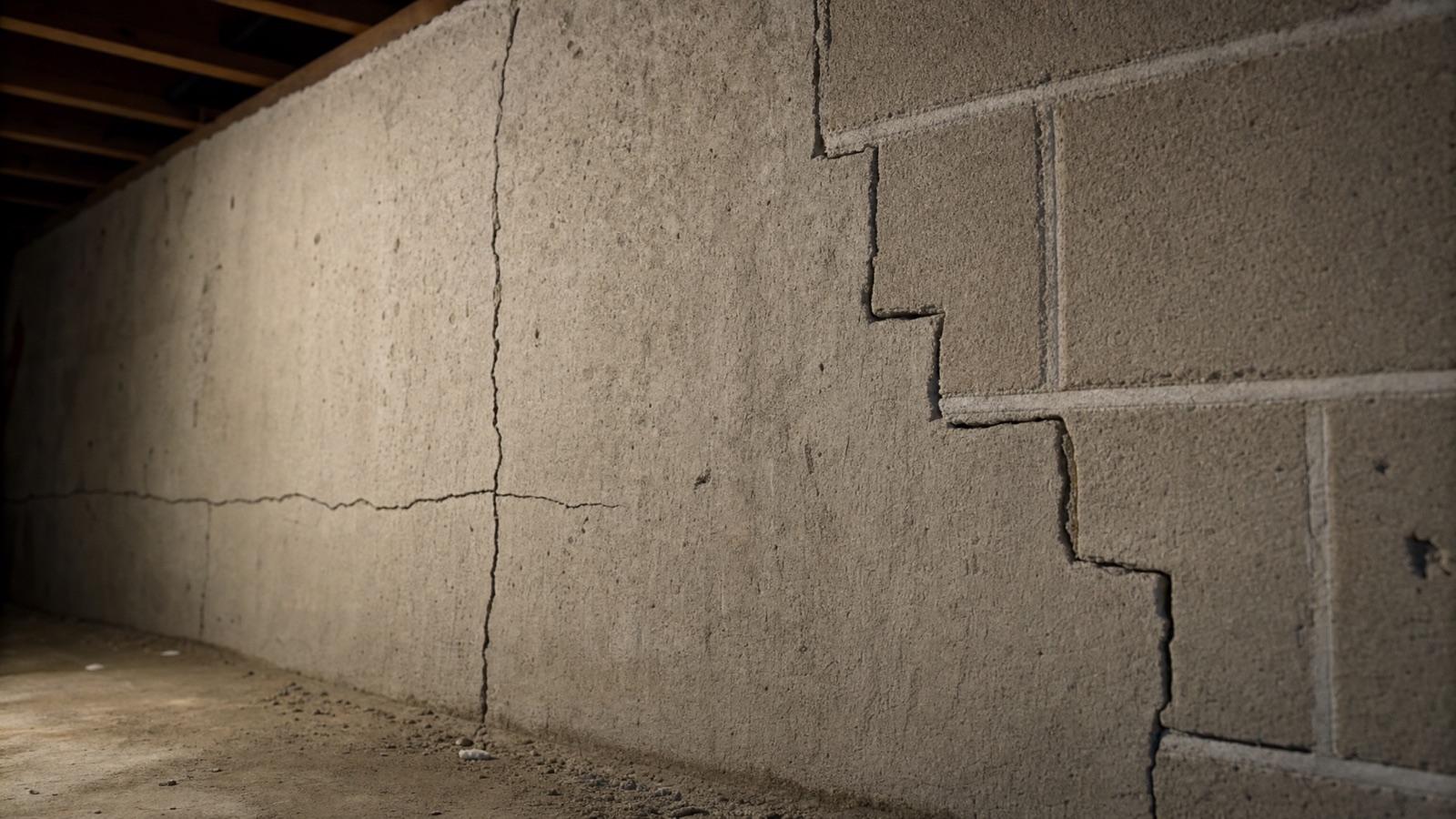
Not every crack in your foundation is a crisis, but some are easy to ignore until they become expensive. The hard part for most Twin Cities homeowners is telling the difference. The good news is that the shape and direction of a crack tells an experienced eye a great deal about what is happening and how urgent it is. Here is how to read the cracks in your own foundation.
Why Minnesota is hard on foundations
Before the crack types, it helps to understand the forces at work in the Upper Midwest. Three local conditions do most of the damage:
- Freeze-thaw cycles. Water in the soil and in existing cracks freezes, expands, and pushes on the foundation, then thaws and repeats. Over a Minnesota winter this happens again and again.
- Expansive clay soil. Much of the East Metro sits on glacial till with pockets of clay that swell when wet and shrink when dry, putting constant changing pressure on foundation walls.
- Hydrostatic pressure. When water builds up in poorly drained soil around the house, it presses against the walls. This is the single most common cause of serious foundation cracks.
Those forces are why a crack here is worth understanding rather than ignoring.
Vertical cracks: usually the least serious
Vertical cracks run straight up and down or lean slightly. They are the most common type and, in most cases, the least worrying. They often appear within the first few years as a house settles into its soil, especially in poured concrete foundations.
A thin vertical crack is frequently a candidate for simple sealing or polyurethane injection, which keeps water out and stops it from widening. That said, vertical cracks are not automatically harmless. If one is widening over time, leaking water, or wider than about a quarter inch, it deserves a professional look.
Horizontal cracks: the most serious
A crack that runs sideways across a foundation wall is the one to take seriously. Any horizontal crack is structural until proven otherwise. It is the classic sign of pressure pushing the wall inward, usually from hydrostatic pressure, saturated expansive clay, or frost. Left alone, a horizontal crack tends to be followed by bowing, where the wall visibly leans inward, and in severe cases the wall can fail.
If you see a horizontal crack, especially with any bow or inward lean, do not wait. These walls are typically stabilized with carbon fiber straps or steel braces rather than replaced, but the timing matters. The earlier it is caught, the simpler and less costly the fix.
Stair-step cracks: high concern in block walls
Stair-step cracks follow the mortar joints of a concrete block or brick foundation in a diagonal, stepped pattern. They usually point to uneven settlement or to the same inward pressure that causes horizontal cracking. Minor stair-step cracking can sometimes be repointed, but cracks wider than about a quarter inch, or any that come with a bulge in the wall, signal real movement that needs structural repair.
Because so many older East Metro homes have concrete block foundations, stair-step cracks are one of the most common issues we are called out for. Our block repair work often addresses exactly this pattern with reinforcement or core filling.
Diagonal cracks: moderate to high concern
Diagonal cracks run at an angle, often roughly 30 to 70 degrees, and are frequently wider at one end. They typically mean one part of the home has settled more than another, which is common on sloped lots or where soil support is uneven. A thin diagonal crack may only need monitoring and sealing. A wide diagonal crack, particularly one where the two sides no longer line up, indicates differential settlement that should be evaluated for piering or stabilization.
Hairline and shrinkage cracks: usually cosmetic
Very fine, spiderweb, or shrinkage cracks in concrete walls and floors often form as concrete cures and are usually cosmetic. They still let in moisture and radon over time, so sealing them is smart, but they rarely indicate a structural problem on their own.
A simple severity cheat sheet
- Thin vertical crack, not growing: usually minor, seal and monitor.
- Any horizontal crack: serious, get it inspected promptly.
- Stair-step crack in block, wider than a quarter inch or bulging: structural, needs repair.
- Wide diagonal crack with offset sides: settlement, needs evaluation.
- Any crack wider than about a quarter inch, leaking, or actively widening: have it looked at.
When you are unsure, measure the width, take a photo, and note whether it is changing. That information helps a lot during an inspection.
What causes a crack matters more than the crack itself
Here is the part many companies skip. Sealing a crack without addressing why it formed is a temporary fix. If the real problem is water pooling against the foundation, the crack, or a new one, will come back. That is why we trace every crack to its source. Often the long-term answer is better drainage through corrective grading and drain tile, paired with the structural repair itself. Fixing the cause is the difference between a repair that lasts and one you pay for twice.
If you have spotted any of these cracks, the smartest first step is a free, honest inspection. We will tell you plainly whether it is cosmetic or structural, what is driving it, and the least invasive way to fix it. You can read more about the broader warning signs of foundation trouble too.
Get a free foundation inspection
Concrete & Foundation Solutions has spent over 20 years diagnosing and repairing foundations across the Twin Cities East Metro and St. Croix Valley. If a crack has you concerned, call 651-364-4400 or request a free inspection. We will give you a straight answer and a clear plan, with no pressure.
Related Services
Have a Foundation Concern?
Get a free, honest inspection from a local team with 20+ years of Twin Cities experience.
Call 651-364-4400