
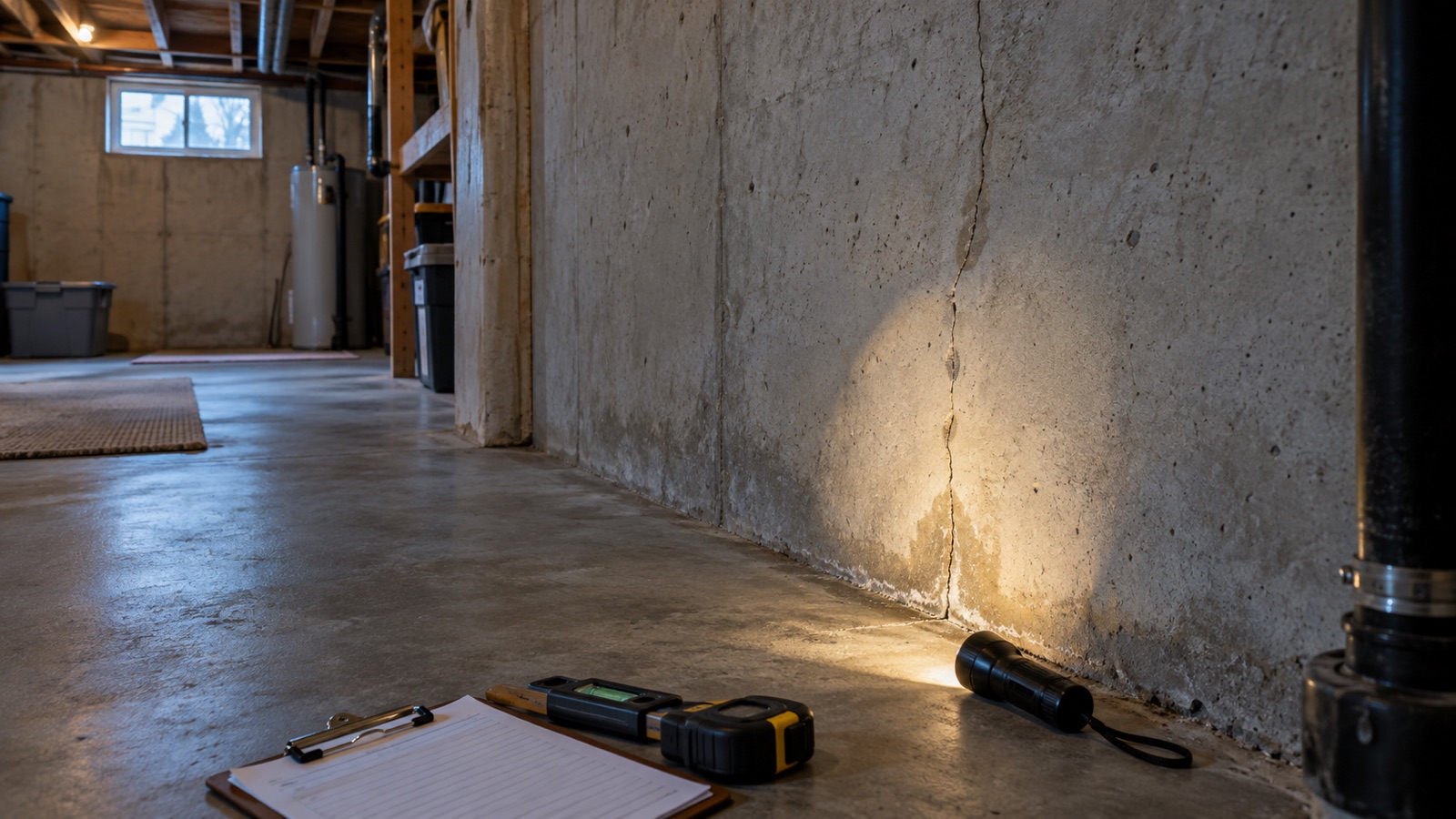
A foundation inspection checklist helps a Twin Cities homebuyer notice the right details before closing, but it is not a do-it-yourself structural diagnosis. The goal is to document visible conditions, ask better questions, and know when a general home inspection should be followed by a focused foundation review.
Minnesota homes face snowmelt, heavy rain, freeze-thaw cycles, and soil that can change with moisture. Those conditions make the basement, exterior drainage, and foundation worth a careful look even when the house appears well maintained.
Start with the disclosure and repair history
Read the seller’s disclosure before the inspection, then compare it with what you see. Minnesota law generally requires a seller to disclose known material facts that could adversely and significantly affect a buyer’s use or enjoyment of the property. The law also recognizes that some conditions can be found only in inaccessible areas or by someone with specialized expertise.
That makes the disclosure useful history, not a substitute for an inspection. Ask for any available records related to:
- Previous foundation or masonry repairs
- Basement water intrusion or flooding
- Drain tile, sump pump, or grading work
- Engineer reports, contractor proposals, permits, and warranties
- Radon tests and mitigation systems
- Dates when cracks or moisture were first noticed
Look for consistency. A repaired crack with a documented cause, scope, and warranty is easier to evaluate than a fresh patch with no explanation. If the seller does not have records, that does not prove a defect, but it leaves more for your inspector to clarify.
Walk the exterior before going downstairs
Water management is part of a foundation inspection. University of Minnesota Extension identifies poor grading, deficient gutters and downspouts, window well problems, and drainage failures as common contributors to basement moisture.
Walk the full perimeter and check:
- Grade: Does the ground slope away from the house, or do low areas direct water toward the wall?
- Gutters and downspouts: Are they intact, and do extensions carry roof water away from the foundation?
- Hard surfaces: Do patios, walks, steps, or driveways tilt toward the house or separate from it?
- Window wells: Are they clear, covered where appropriate, and high enough to keep runoff out?
- Foundation walls: Note visible cracks, gaps, patched areas, flaking concrete, displaced block, or a wall that does not appear straight.
- Additions and porches: Look where newer and older structures meet, since movement may show at the joint.
Do not use one universal crack width as a pass or fail rule. Direction, displacement, wall shape, moisture, repair history, and whether the condition is changing all matter. Our guide to foundation crack types can help you describe what you see, but the appearance alone does not establish the cause.
Inspect the basement or crawl space carefully
Bring a flashlight and look at every accessible wall, not only the finished recreation area. Storage, insulation, drywall, and paneling can limit what an inspector can see, so ask the report to identify any access limitations.
Check the walls and floor
Photograph cracks with enough surrounding wall visible to show their location and direction. Note stair-step patterns in block, cracks that continue through several materials, offset surfaces, inward wall movement, and repeated patching. On the floor, look for heaving, settlement, wide openings, or water emerging through the slab or wall-floor joint.
Look for moisture evidence
University of Minnesota Extension lists water stains, efflorescence, peeling or blistered finishes, damp materials, musty odors, mold, rot, and damaged flooring among the clues worth investigating. These signs can come from surface runoff, groundwater, plumbing, or condensation. They do not automatically mean the foundation is structurally damaged.
Ask when the moisture appears and whether it follows rain, spring snowmelt, or humid summer weather. Our guide to why East Metro homes get wet basements explains why the timing and location help identify the water path.
Review the sump and drainage system
Confirm that a sump pit is accessible and that the inspector can evaluate the pump, float, power source, and discharge route. Ask where the discharge ends and whether it returns water near the foundation. If there is evidence of recurring seepage, the next step may involve corrective grading, drain tile work, sump improvements, or a combination based on the source.
Note related clues in the rest of the house
Foundation movement can sometimes show away from the basement. Record doors or windows that bind, floors that feel uneven, trim separating from walls, drywall cracks that repeat above openings, or a chimney or porch pulling away from the house.
Each observation can have a nonstructural explanation. A seasonal door can stick because of humidity, and a drywall seam can crack from ordinary material movement. The concern increases when several signs align in one part of the house or appear with visible foundation displacement below.
Know when to request a focused review
A general home inspector evaluates visible conditions across the entire home. That broad inspection is essential, but an inspector may recommend additional evaluation when the foundation, drainage, or moisture pattern falls outside the inspection’s scope.
Request focused follow-up when you see substantial or changing cracks, bowing or displacement, repeated water entry, unexplained repairs, inaccessible foundation areas, or an inspection report that recommends a qualified specialist. A pre-purchase foundation review can document the condition, explain repair options, and provide written repair estimates. If the question requires structural engineering analysis or design, ask for a Minnesota-licensed professional engineer.
Radon belongs in the due diligence plan too, but it is not evidence of foundation damage. The Minnesota Department of Health strongly recommends radon testing for homebuyers and says real estate testing should evaluate the lowest occupiable level for each foundation type.
Turn findings into clear next steps
Before the inspection period ends, ask for written answers to four questions:
- What condition was observed, and where is it located?
- Is the cause reasonably clear, or is more evaluation needed?
- Is repair recommended now, or should the condition be monitored?
- What access, documentation, estimate, or specialist opinion is still missing?
Use the answers with your home inspector, real estate agent, and other transaction professionals. The right outcome may be a documented minor condition, a repair plan, a negotiated response, or a decision not to proceed. The checklist gives you evidence for that decision instead of leaving the foundation as an unknown.
Concrete & Foundation Solutions serves homebuyers and homeowners across the Twin Cities East Metro and St. Croix Valley. Prospective-buyer reviews are a flat $500 and include a written report with repair cost estimates. Current homeowners receive foundation inspections at no charge. Call 651-364-4400 or contact us to schedule while the foundation is accessible and your inspection timeline is still open.
Sources
- Minnesota Attorney General, Home Buyer’s Handbook
- Minnesota Statutes 513.55, general disclosure requirements
- Minnesota Statutes 513.57, disclosure liability and inspection limits
- University of Minnesota Extension, moisture in basements
- Minnesota Department of Health, radon in real estate
- Minnesota Board of AELSLAGID, professional engineering
Related Services
Have a Foundation Concern?
Get a free, honest inspection from a local team with 20+ years of Twin Cities experience.
Call 651-364-4400