
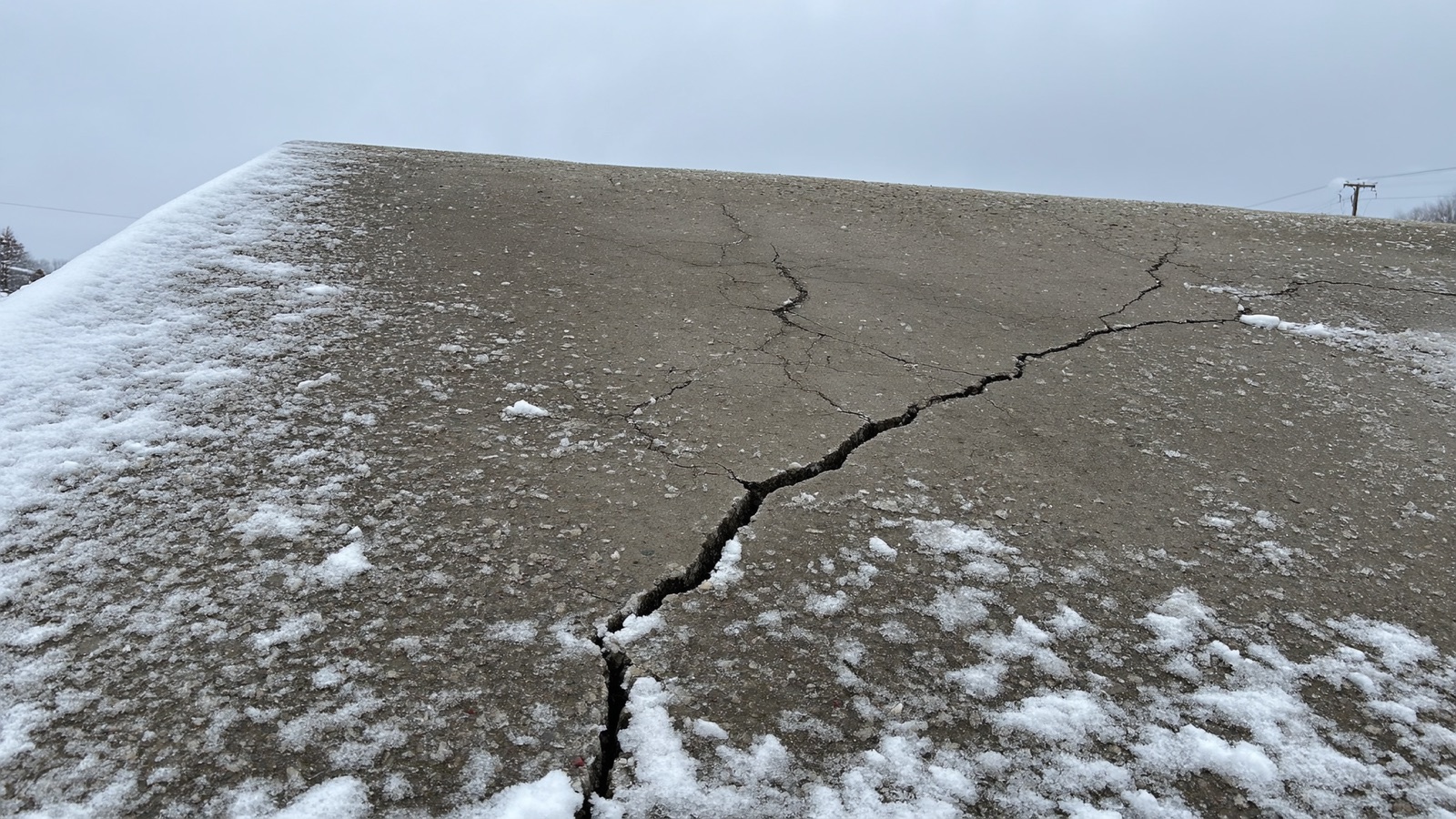
Every Minnesota winter, the ground under your home does something most homeowners never see. It swells. In the Twin Cities East Metro, where the soil is heavy glacial clay till and frost can drive three to four feet deep, that swelling exerts enough force to lift concrete, crack block, and jam the doors in your house. It is called frost heave, and it is one of the most common reasons East Metro foundations start to move.
What Frost Heave Actually Is
Frost heave is not simply frozen water in the ground pushing up. The real mechanism is more interesting, and understanding it explains why some homes suffer and others sit right next door untouched.
As cold weather pushes the freezing front down into the soil, water below that front is drawn upward toward it through tiny capillary channels between soil particles. When that migrating water reaches the freezing zone, it freezes into thin bands of pure ice called ice lenses. These lenses keep pulling in more water from below and keep growing, stacking layer on layer. A growing ice lens does not just expand the nine percent that water normally does when it freezes. It can lift the ground above it by inches over a single winter.
For frost heave to happen, three things have to line up:
- Frost-susceptible soil. Silts and clays, the fine-grained soils that hold water and wick it upward, are the worst offenders. Clean sand and gravel drain too fast to feed an ice lens.
- Freezing temperatures reaching the soil. Minnesota supplies this in abundance.
- A water source below the freeze line. Wet ground, poor drainage, and a high water table all keep the ice lenses fed.
Take away any one of the three and heaving stops. That is the key to prevention, and we will come back to it.
Why Twin Cities Soil Makes It Worse
The East Metro sits on glacial till, the unsorted mix of clay, silt, sand, and gravel that the last ice sheet left behind. The clay and silt fractions in that till are exactly the fine-grained, moisture-holding material that feeds ice lenses. Where a home in a sandy river valley might shrug off a cold snap, homes across Woodbury, Oakdale, Maplewood, and Cottage Grove sit on soil built to hold water and heave.
Minnesota’s building code reflects how deep the problem runs. The state requires foundation footings a minimum of 42 inches below grade in the Twin Cities and most of the state, and 60 inches in the coldest northern counties. That depth is not arbitrary. It is meant to put the footing below where the ground reliably freezes so the frozen soil never gets under it. The freeze-thaw punishment that concrete takes above the frost line is the same force we cover in our post on why Minnesota freeze-thaw cycles are so hard on concrete.
Where Frost Heave Hits a House
A properly built foundation wall on a 42-inch footing is well protected. The trouble usually shows up on everything attached to it that was not built as deep.
- Attached garage slabs. An unheated garage acts like a cold tunnel next to your warm house. The soil under the slab and along the garage foundation freezes hard, and a slab poured shallow lifts, cracks, and tilts.
- Front steps, stoops, and porches. These are often set on shallow footings or none at all, so they ride up and down with the frost.
- Sidewalks and driveways. One corner lifts, the next stays put, and you get the uneven, cracked slabs so common on older East Metro properties.
- Shallow additions and three-season rooms. Anything added later without full frost footings is a candidate for heaving.
- Foundation walls with bad drainage. Even a code-depth wall can heave laterally if the backfill soil stays saturated and freezes against it.
The Warning Signs to Watch For
Frost heave rarely announces itself. It shows up as a collection of small changes that get worse each winter. Watch for:
- Doors and windows that suddenly stick in winter, then loosen up in spring. That seasonal rhythm is a classic frost heave fingerprint.
- New cracks in the garage slab or basement floor, especially ones with a lifted or tilted edge.
- Sidewalk, stoop, or driveway sections that no longer line up, with one slab riding higher than its neighbor.
- Diagonal cracks at the corners of doors and windows inside the house.
- Cracks that open in winter and partly close in spring. Movement that reverses with the seasons points to frost, not simple settling.
The dangerous part is the cycle. The ground heaves in December and settles in April, but it rarely settles back all the way. Each round leaves the crack a little wider and the slab a little more out of level, and once a crack forms, meltwater runs straight into it and keeps the soil below wet and ready to heave harder next year.
How to Stop Frost Heave
Because frost heave needs water to feed the ice lenses, water control is the single most effective defense. Most of what protects a Twin Cities home comes down to keeping the soil around the foundation dry and draining.
- Move roof water away. Extend downspouts at least six feet from the house so they are not dumping thousands of gallons right against the foundation soil.
- Fix the grade. Soil should slope away from the house so surface water runs off instead of pooling. When it slopes the wrong way, corrective grading resets the drainage and is often the highest-value fix a homeowner can make.
- Give subsurface water somewhere to go. A working drain tile system carries groundwater away from the footings before it can freeze and heave. Our guide to why East Metro homes get wet basements walks through how that water moves.
- Build to depth. New slabs, steps, and additions should reach the local frost line or be isolated with proper insulation so the frozen soil cannot get a grip.
- Use the right backfill. Free-draining gravel next to a foundation resists heaving far better than the native clay till.
When damage has already started, drainage alone will not lift a settled slab or close a structural crack. That is repair work, and the right method depends on what moved and why. Our overview of foundation repair covers how we stabilize walls, footings, and slabs that frost and soil movement have pushed out of place.
Get an Honest Look Before Next Winter
The best time to deal with frost heave is before the ground freezes again. If your doors stick every January, your garage slab has a new crack, or your sidewalk is climbing out of level, those are not cosmetic quirks. They are the soil telling you what it does every winter.
Concrete & Foundation Solutions has spent more than 20 years diagnosing and repairing frost-driven foundation problems across Woodbury, Stillwater, Cottage Grove, Oakdale, and the wider East Metro and St. Croix Valley. We will tell you honestly whether you are looking at a drainage fix, a structural repair, or nothing to worry about yet.
Call 651-364-4400 or request a free inspection and we will help you get ahead of it before the next hard freeze.
Related Services
Have a Foundation Concern?
Get a free, honest inspection from a local team with 20+ years of Twin Cities experience.
Call 651-364-4400