
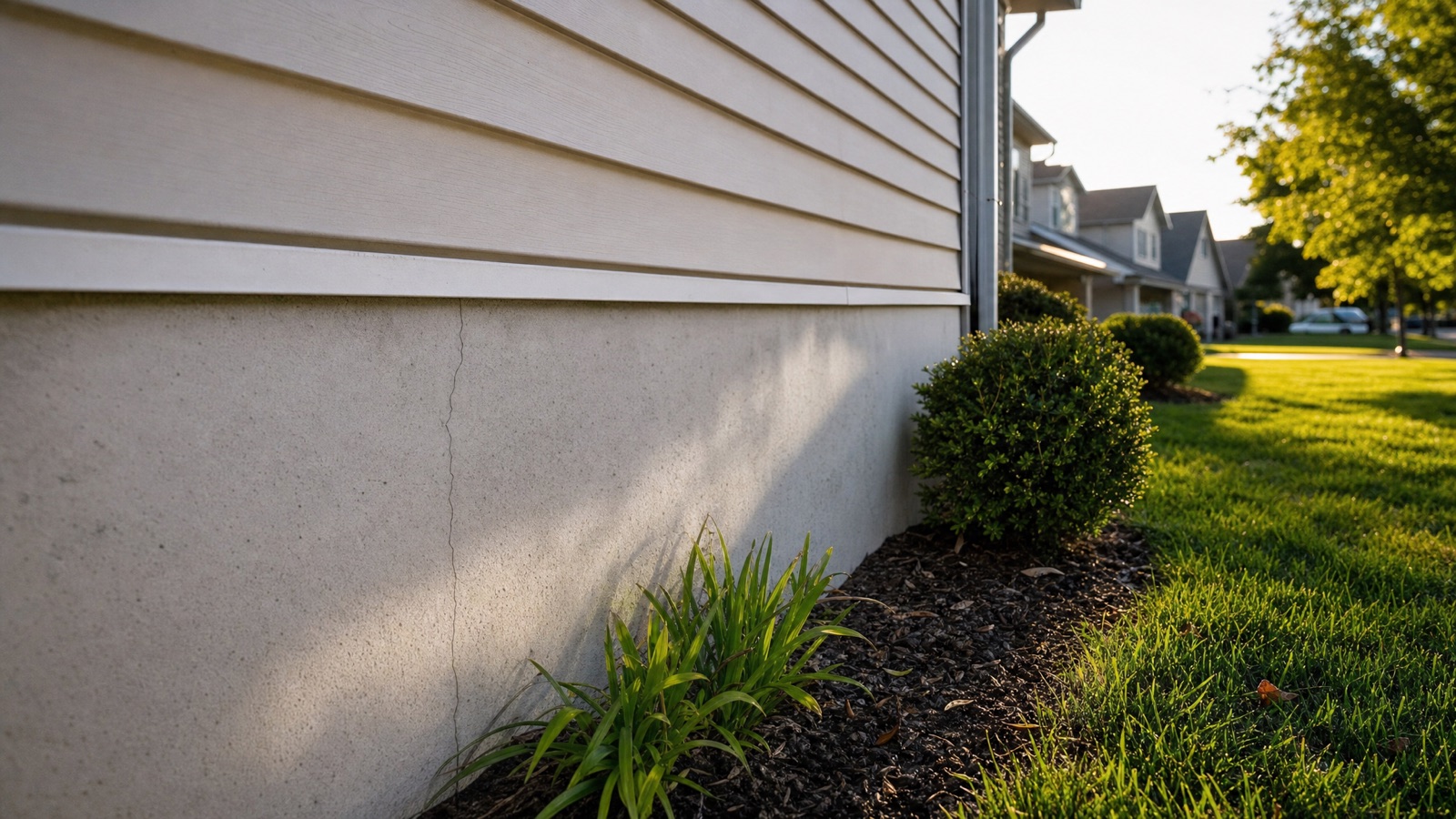
Foundation problems do not have to sink a home sale in the Twin Cities, but they do change how the sale has to be run. The sellers who lose the most money are rarely the ones with the worst foundations. They are the ones who found out at the same time the buyer did, three weeks into a purchase agreement, with a closing date already set.
There are three honest paths for a Minnesota seller with a foundation issue: repair it before listing, price it in and sell as-is, or hand the decision to the buyer and negotiate. Each one can be the right call. What is never the right call is hoping nobody looks.
Minnesota Disclosure Law Is Not Optional
Minnesota Statute 513.55 requires a seller of residential property to make a written disclosure to the buyer before signing a purchase agreement, covering all material facts the seller is aware of that could adversely and significantly affect an ordinary buyer’s use and enjoyment of the property. The disclosure has to be made in good faith and based on the best of the seller’s knowledge at the time.
A bowing basement wall, a history of water in the basement, a settled corner, or a foundation repair you had done in 2019 all fall squarely inside that. Repairs are disclosable too, and disclosed repairs with paperwork behind them are far easier to sell than a foundation with an unexplained patch on it.
A few points Minnesota sellers routinely get wrong:
- “As-is” does not cancel disclosure. Selling in as-is condition addresses who pays for repairs. It does not remove your statutory duty to disclose what you know.
- Disclosure can be waived only by written agreement between the seller and buyer, which is unusual outside genuine fixer-upper or estate sales.
- Partial honesty is worse than silence. Minnesota courts have long held that a party who chooses to speak must say enough that the words do not mislead. Describing a wet basement as “a little seasonal moisture” when you run two dehumidifiers year round is the kind of half-answer that turns into a lawsuit after closing.
- You can substitute a qualified third party’s written report. Under Minnesota Statute 513.56, a report from a qualified third party can satisfy the requirement, though you must still disclose known facts that contradict it.
That last point is the one worth building a strategy around, because a written report from a foundation specialist does more than protect you legally.
What Buyers Actually Do With the Word “Foundation”
Most buyers cannot tell a harmless hairline shrinkage crack from a horizontal crack that signals lateral soil pressure, and neither can most general home inspectors past the point of writing “recommend evaluation by a qualified structural specialist.”
That sentence, dropped into a buyer’s inspection report with no numbers attached to it, is the most expensive sentence in residential real estate. The buyer’s imagination fills the vacuum. They are not estimating a $900 crack injection. They are picturing the worst thing they read online, and their agent is advising them to protect themselves.
National cost data shows how wide that gap really is. Minor crack repair with epoxy or polyurethane injection commonly runs a few hundred dollars to roughly $800, while full underpinning with piers is genuinely expensive, often five figures. When a buyer has no documentation, they negotiate as if every foundation is the five-figure version. Treat any figure you see online as a range, not a quote, because the actual number depends on what is happening at your house.
We cover Minnesota-specific numbers in more depth in our foundation repair cost guide, and the difference between cracks that matter and cracks that do not in foundation crack types explained.
The Financing Problem Sellers Do Not See Coming
Even if your buyer is comfortable with the foundation, their lender may not be. FHA, VA, and USDA loans require the property to meet minimum structural standards. When an appraiser sees visible structural distress, the appraisal typically comes back “subject to repair” or “subject to inspection by a qualified professional.” The loan cannot close until the repair is completed and verified, or a structural engineer certifies the condition does not impair structural integrity.
For a seller, that means a foundation issue can quietly shrink your buyer pool to conventional-financed and cash buyers only, and cash buyers discount hard for exactly this reason. In an East Metro market where plenty of buyers use FHA and VA financing, that is a real hit to demand. It is also why timing matters. Discovering the issue during the appraisal period, with movers booked, gives you no leverage at all.
Your Three Real Options
1. Repair before listing. Best when the repair is well defined and the market is competitive. You control the contractor, the schedule, and the price rather than accepting a buyer’s inflated credit demand. You list with completed work, a written scope, and a warranty, appraisal risk drops, and FHA and VA buyers stay in your pool.
2. Document it and price it in. Best when the repair is large, or you do not want to manage a project before moving. Get a written specialist assessment with real repair options and estimates, disclose it up front, and price accordingly. Buyers negotiate far more reasonably against a documented $6,000 scope than against an unpriced unknown.
3. Sell as-is to an investor or cash buyer. Fastest and simplest, and the most expensive in net proceeds. Reasonable when the home needs significant work beyond the foundation, or when speed matters more than price.
Notice that all three start in the same place: knowing exactly what you have, in writing, before a buyer’s inspector defines it for you. That is the entire purpose of a pre-sale foundation review.
Documentation Is the Asset
If you do repair, what you keep matters as much as the repair itself. Assemble a package and hand it to your agent before the listing goes live:
- The repair contract and written scope of work
- Any structural engineer report or letter
- Before and after photographs
- Permits, where the work required them
- The warranty certificate, and confirmation that it transfers to the buyer
A transferable warranty from an established local contractor is the single most reassuring document in that stack. It converts “this house had foundation work” from a red flag into a solved problem with coverage attached. Appraisers and agents consistently report that well-documented, warrantied repairs affect value far less than undocumented ones, and in a strong market the effect can be negligible.
The reverse is also true. An obvious repair with no paperwork behind it reads as a cover-up, even when the work was done correctly.
Local Conditions Are Part of the Story
Foundation issues in Woodbury, Stillwater, and the rest of the East Metro usually have a traceable cause, and being able to name it helps buyers relax. Freeze-thaw cycling, clay-heavy glacial soils, downspouts dumping against the wall, and grading that has settled toward the house over twenty years account for a large share of what we see.
When your documentation says “the problem was negative grading on the north side, the wall was stabilized, and drainage was corrected,” a buyer hears a diagnosis and a fix. When it says nothing, they hear “the house is moving.”
Get It Assessed Before the Buyer Does
If you are listing in the next several months and you have seen a crack, a damp basement corner, a sticking door, or anything that made you wonder, get it looked at now while you still have every option open. We serve homeowners across the East Metro and St. Croix Valley, and our foundation repair inspections are free. If repairs make sense before listing, financing is available so the work does not have to wait on your closing proceeds.
Call Concrete & Foundation Solutions at 651-364-4400 to schedule a free inspection. Knowing what you have is worth more than hoping nobody asks.
Related Services
Have a Foundation Concern?
Get a free, honest inspection from a local team with 20+ years of Twin Cities experience.
Call 651-364-4400