
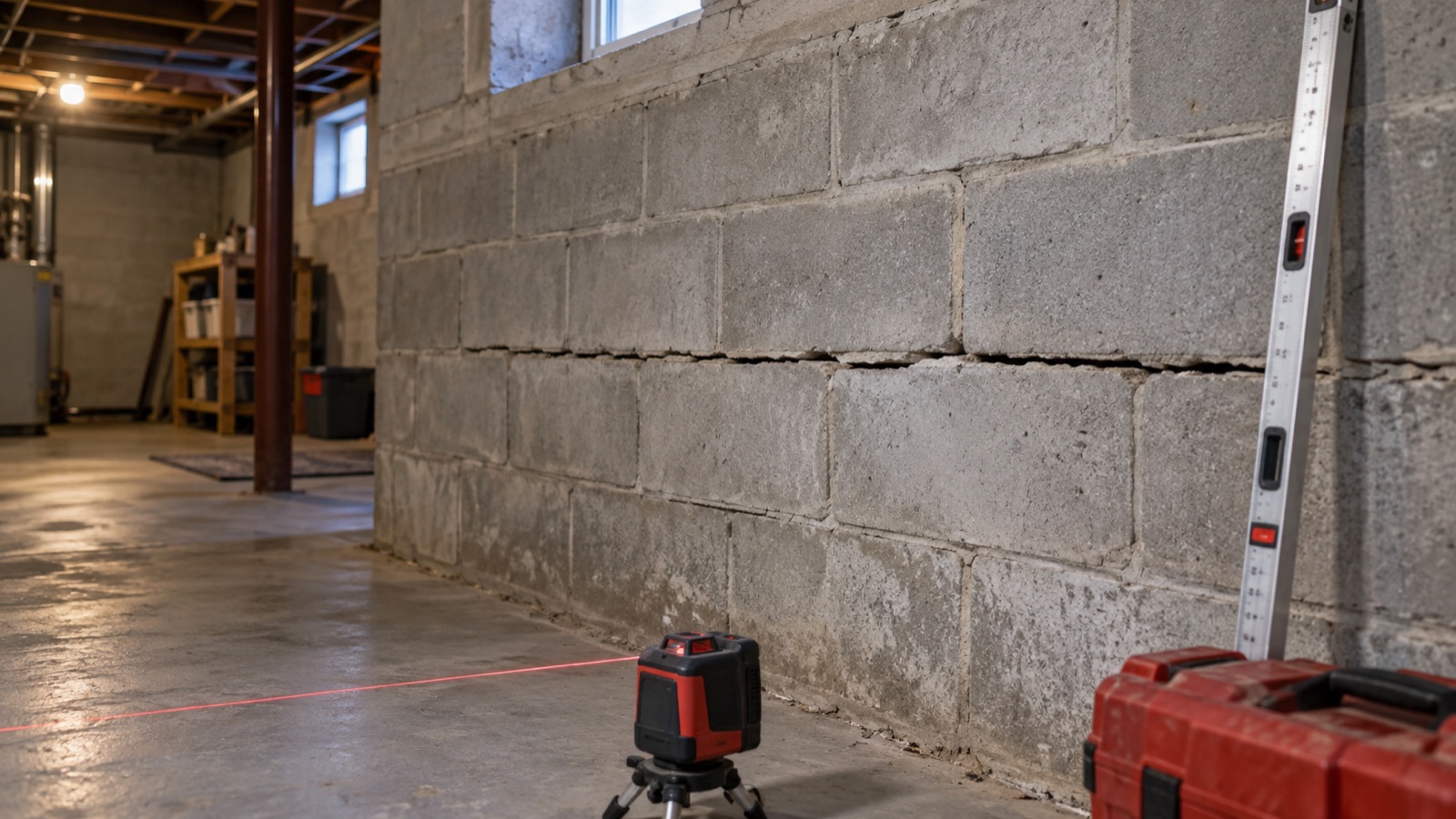
Structural repair and foundation repair overlap, but they are not the same thing. Foundation repair describes work on the foundation system, while structural repair specifically restores the strength, stability, or load path of the home. The right label depends on what failed, why it moved, and whether the damage affects the building’s support.
That distinction matters in Minnesota. Freeze and thaw cycles, variable glacial soils, poor drainage, and hydrostatic pressure can produce similar-looking cracks for very different reasons. A Twin Cities homeowner needs a diagnosis before choosing a product or accepting a repair plan.
What is the difference between structural repair and foundation repair?
Foundation repair is the broader category. It can include sealing a nonmoving crack, rebuilding a damaged block section, stabilizing a bowed wall, correcting settlement, or addressing water and soil conditions that are stressing the foundation.
Structural repair is narrower. It applies when the problem affects a load-bearing wall, footing, beam, column, or another part of the system that keeps the building stable. A structural foundation repair may use reinforcement, wall stabilization, rebuilding, or support beneath a settling area. The method should follow the observed failure, not the other way around.
| Condition | Likely category | What matters most |
|---|---|---|
| Stable hairline concrete crack | Monitoring or nonstructural foundation repair | Whether it changes, leaks, or shows displacement |
| Leaking crack without wall movement | Waterproofing and foundation repair | Stopping the water path and correcting the source |
| Horizontal crack with inward bowing | Structural foundation repair | Measuring movement and restoring wall stability |
| Uneven settlement with floor or opening changes | Structural evaluation | Finding the cause and confirming the affected load path |
| Water pooling beside an intact wall | Drainage or grading correction | Reducing future soil pressure before damage develops |
Which warning signs suggest a structural problem?
One symptom rarely tells the whole story. The pattern, direction, width, displacement, and rate of change matter more than the presence of a crack alone. Watch for combinations such as:
- A horizontal crack across a block wall, especially when the wall also leans or bows inward
- Stair-step cracking with shifted mortar joints rather than a thin, stable line
- Doors or windows that suddenly bind along with new wall or floor movement
- Sloping or separating floors near a foundation wall or support point
- A wall pulling away from framing, columns, or perpendicular walls
- Cracks that reopen or grow after a surface patch
Our guide to foundation crack types explains how vertical, horizontal, and stair-step patterns differ. Photographs and dated measurements can help track change, but they do not replace an on-site evaluation.
Why do Twin Cities foundations move?
Minnesota homes sit on varied ground. The U.S. Geological Survey describes much of the state’s glacial drift as till, an unsorted mixture of clay, silt, sand, and gravel. That variation means soil behavior can change between neighborhoods and even across one lot.
Water is often the force that turns a manageable condition into a larger problem. Clay-rich and compacted soils drain slowly, and saturated soil can increase pressure against a basement wall. University of Minnesota Extension notes that drainage planning depends on soil information, slope, topography, outlet conditions, and local rules. That is why a complete repair plan looks outside as well as inside.
Minnesota’s residential code also requires frost protection for footings and permanent supports. When water, frost, fill, or settlement changes the support beneath a home, the visible crack may be only the symptom.
Good diagnosis separates three questions:
- What moved? The wall, footing, slab, or only a surface layer.
- Why did it move? Soil pressure, settlement, water, frost, material failure, or a combination.
- What prevents a repeat? Stabilization, drainage, grading, rebuilding, or ongoing monitoring.
What does a proper inspection include?
A useful inspection is not a quick glance followed by a product pitch. It should document the crack pattern, wall alignment, signs of water entry, changes at doors and windows, exterior drainage, downspout discharge, and the way the foundation connects to the framing above.
For a bowed block wall, the inspector may measure deflection and check whether the top and bottom of the wall remain supported. For settlement, the investigation should consider where movement appears through the house, not just at the most obvious crack. For moisture problems, it should trace how water reaches the foundation.
Minnesota rules require inspection of permitted foundation work at specific stages, including before poured walls are completed and before foundation walls are backfilled. Permit and engineering requirements vary by project and jurisdiction, so the repair scope should identify those steps before work begins. When a proposed alteration affects structural loads or falls outside an exemption, Minnesota rules may require plans prepared and certified by a licensed architect or engineer.
Which repair solves which problem?
The repair should match both the damage and its cause.
- Crack sealing can stop water through a stable crack, but it does not stabilize a moving wall.
- Block wall reinforcement or rebuilding may be appropriate when masonry has bowed, shifted, or deteriorated. See our block repair service for the types of block damage we address.
- Settlement stabilization targets inadequate support beneath the affected area. The design depends on the structure and soil conditions.
- Drainage and grading work reduces water beside the foundation. Corrective grading can be part of the long-term answer when the yard directs runoff toward the house.
- Comprehensive foundation repair combines the structural fix with water and soil control when both contributed to the failure. Our foundation repair service covers that full diagnostic approach.
The cheapest-looking proposal can become expensive if it treats only the visible symptom. Ask every contractor to explain the cause, the measurements behind the recommendation, the permit or engineering path, what the repair will not fix, and how future movement will be monitored.
Get a clear foundation diagnosis before choosing a fix
Homes in Woodbury and the surrounding East Metro do not all need the same repair because they do not sit on the same soil or experience water in the same way. Our Woodbury service area page explains the local conditions we consider when evaluating a home.
Concrete & Foundation Solutions provides free inspections across the Twin Cities East Metro and St. Croix Valley. If you see a bowing wall, changing crack, uneven floor, or recurring water entry, call 651-364-4400. We will identify whether the problem calls for structural repair, another type of foundation repair, drainage work, or careful monitoring before recommending a scope.
Sources
Related Services
Have a Foundation Concern?
Get a free, honest inspection from a local team with 20+ years of Twin Cities experience.
Call 651-364-4400