
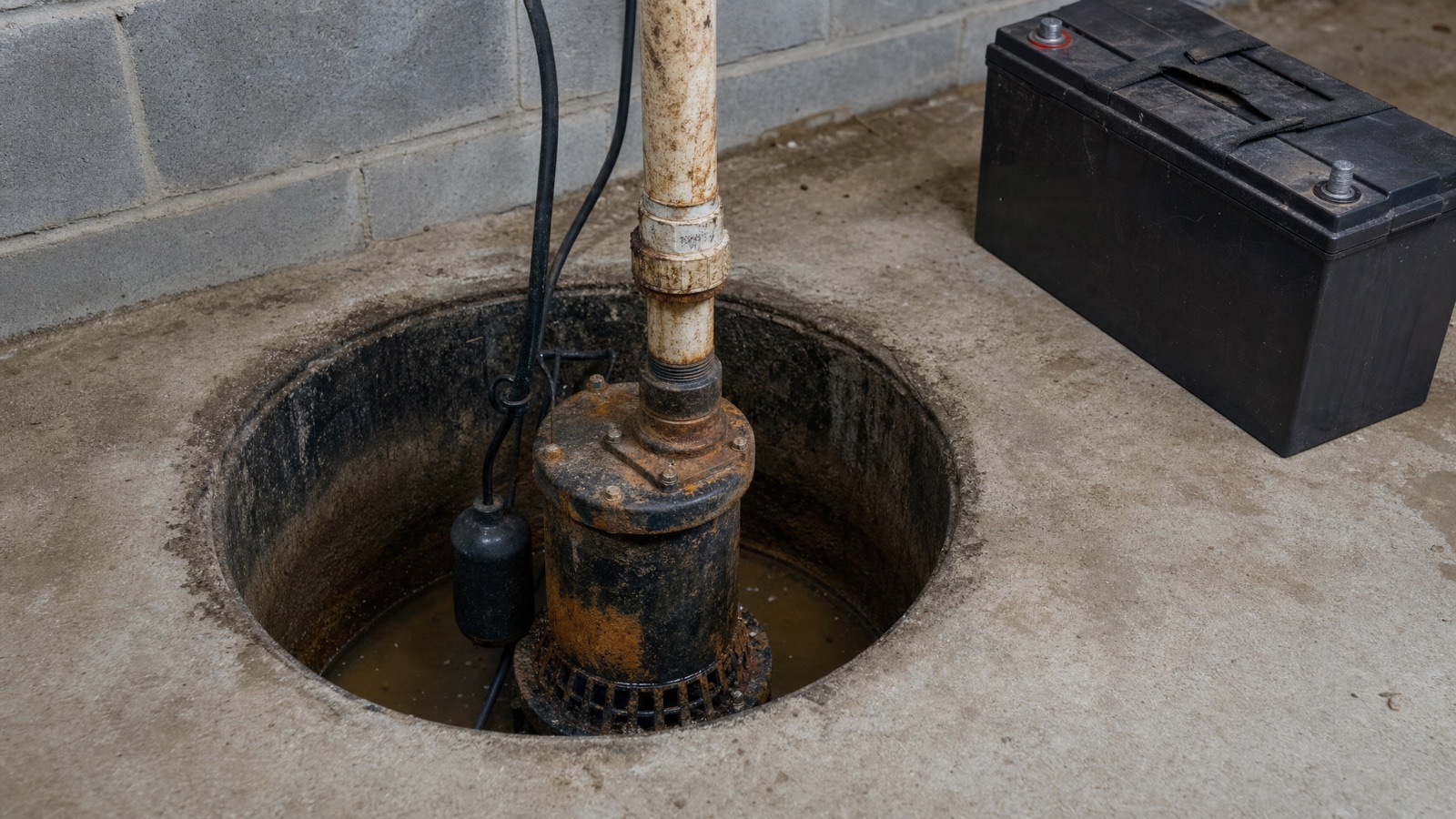
A sump pump almost never fails quietly on a calm day. It fails at 2 a.m. during a spring thaw or the third inch of a July downpour, which is exactly when a Twin Cities basement fills fastest. The good news is that pumps give warning before they quit, and most of those warnings are easy to spot if you know what to listen and look for.
Here are the seven signs we see most often on East Metro service calls, what each one actually means mechanically, and what to do about it.
1. The Pump Runs Constantly, Even When It Is Dry Outside
A sump pump should cycle in response to groundwater, not on a permanent loop. If yours runs for long stretches during a dry week, one of three things is usually happening:
- A failed check valve. The check valve sits in the discharge line and stops water from falling back down the pipe after the pump shuts off. When it fails, that same water drains back into the pit, refills it, and triggers the pump again. The pump ends up moving the same gallon over and over.
- A stuck or misadjusted float. A float set too low keeps the pump running past the point where the pit is actually empty.
- An undersized pit. If the basin is too small for the volume of water your drain tile delivers, the pump short cycles constantly and wears out years early.
Constant running is the single most expensive symptom to ignore, because a motor that never rests is a motor on borrowed time.
2. It Cycles On and Off Rapidly
Short cycling looks different from constant running. The pump kicks on, runs three or four seconds, shuts off, then repeats. That pattern points to a float switch tripping too early, a check valve leaking back, or a horizontal float whose cord has wrapped around the discharge pipe.
Every start pulls a heavy amperage load. A pump that starts sixty times an hour is aging at several times its normal rate.
3. Grinding, Rattling, or Screeching From the Pit
A healthy submersible pump makes a low, even hum. New noises mean new problems:
- Grinding usually means the impeller, the fan-like part that moves water, is jammed with silt, gravel, or sludge.
- Rattling often means a damaged impeller or a worn bearing.
- Screeching or whining points to a motor that is struggling and heading toward seizure.
Pits that collect fine sediment are common in the East Metro, where glacial soils put a lot of silt into groundwater. If your pit has an inch of sludge in the bottom, the pump is drinking it.
4. Visible Rust and Corrosion
Some surface rust on an older pump is normal. Heavy corrosion on the housing or at the discharge fitting is not. Brown, flaky buildup can also come from iron bacteria, a common issue in Minnesota groundwater, which forms a slimy orange residue that clogs intake screens, float mechanisms, and discharge lines.
If you are pulling gelatinous orange sludge out of your pit, the pump is fighting a losing battle and the pit needs cleaning on a schedule.
5. The Pump Is Seven or More Years Old
Typical sump pump service life runs 7 to 10 years. That figure assumes average duty. In neighborhoods with a high water table or heavy clay that sheds water toward the foundation, pumps run far more often and reach the end sooner.
Do the math honestly. If you bought the house in 2014 and the pump was already installed, you do not have a 12 year old pump that is still going strong. You have a pump that is past due.
6. It Does Not Turn On When You Test It
Testing is simple and takes two minutes. Slowly pour a five gallon bucket of water into the pit until the float rises. The pump should start, clear the pit, and shut off cleanly.
If nothing happens, check the outlet first. Sump pumps are often on a GFCI circuit, and a tripped GFCI is the most common reason a pump appears dead. If power is fine and the pump still will not run, the switch or the motor has failed.
Test before spring melt, before the summer storm season, and again in fall. Three tests a year is a reasonable habit for any Minnesota basement.
7. You Have No Battery Backup
This one is not a malfunction, it is a design gap, and it causes more flooded basements in the Twin Cities than mechanical failure does. Severe thunderstorms and heavy wet snow are the two events most likely to knock out power, and they are also the two events that send the most water at your foundation. Your pump is guaranteed to be offline at the exact moment it matters most.
A battery backup is a second pump with its own power source, installed alongside the primary. In moderate conditions a good system will run for several hours on a charge. During a storm where the pump cycles every couple of minutes, expect less. Batteries typically need replacement every three to five years, so a backup is not a set-it-and-forget-it device either.
What Repairs and Replacements Generally Cost
Straight replacement of a submersible pump in an existing pit commonly runs in the range of a few hundred to roughly $1,200 depending on horsepower, switch type, and access. Adding a battery backup system typically adds several hundred dollars more. Full system work, meaning a new basin, new discharge routing, and a combination primary plus backup setup, costs more.
Those are general market ranges, not a quote. Pit condition, discharge routing, and code requirements all move the number. We will give you an accurate figure after we look at the actual installation.
The Pump Is Only Half the System
A sump pump is the last stage of a drainage chain. Water reaches the pit through interior drain tile, and it reaches the drain tile because of how water moves around your foundation in the first place. If your pump is running nonstop, the real problem is often upstream: roof runoff dumping next to the house, or a yard that slopes toward the foundation instead of away from it. Corrective grading and proper downspout extensions frequently cut pump runtime dramatically.
One more thing specific to Minnesota. Sump discharge has to go outside, away from the house, and it cannot be tied into the sanitary sewer. Most East Metro cities, Woodbury included, require exterior discharge with a check valve and rigid pipe. Run that line at a continuous downward slope so it drains fully after each cycle, or it will freeze solid in January and your pump will have nowhere to send water.
If you want the fuller picture on pump types, sizing, and maintenance, read our Minnesota homeowner’s sump pump guide. If your basement is getting wet even with a working pump, start with why East Metro homes get wet basements.
Get It Checked Before the Next Storm
If your pump is showing any of these seven signs, do not wait for a rainy night to find out how bad it is. Concrete & Foundation Solutions has been solving basement water problems across Woodbury, Stillwater, Cottage Grove, Oakdale, and the St. Croix Valley for over 20 years, and we will tell you honestly whether you need a new pump, a drainage fix, or nothing at all.
Call 651-364-4400 or request a free inspection. We will look at the whole system, not just the pump.
Related Services
Have a Foundation Concern?
Get a free, honest inspection from a local team with 20+ years of Twin Cities experience.
Call 651-364-4400